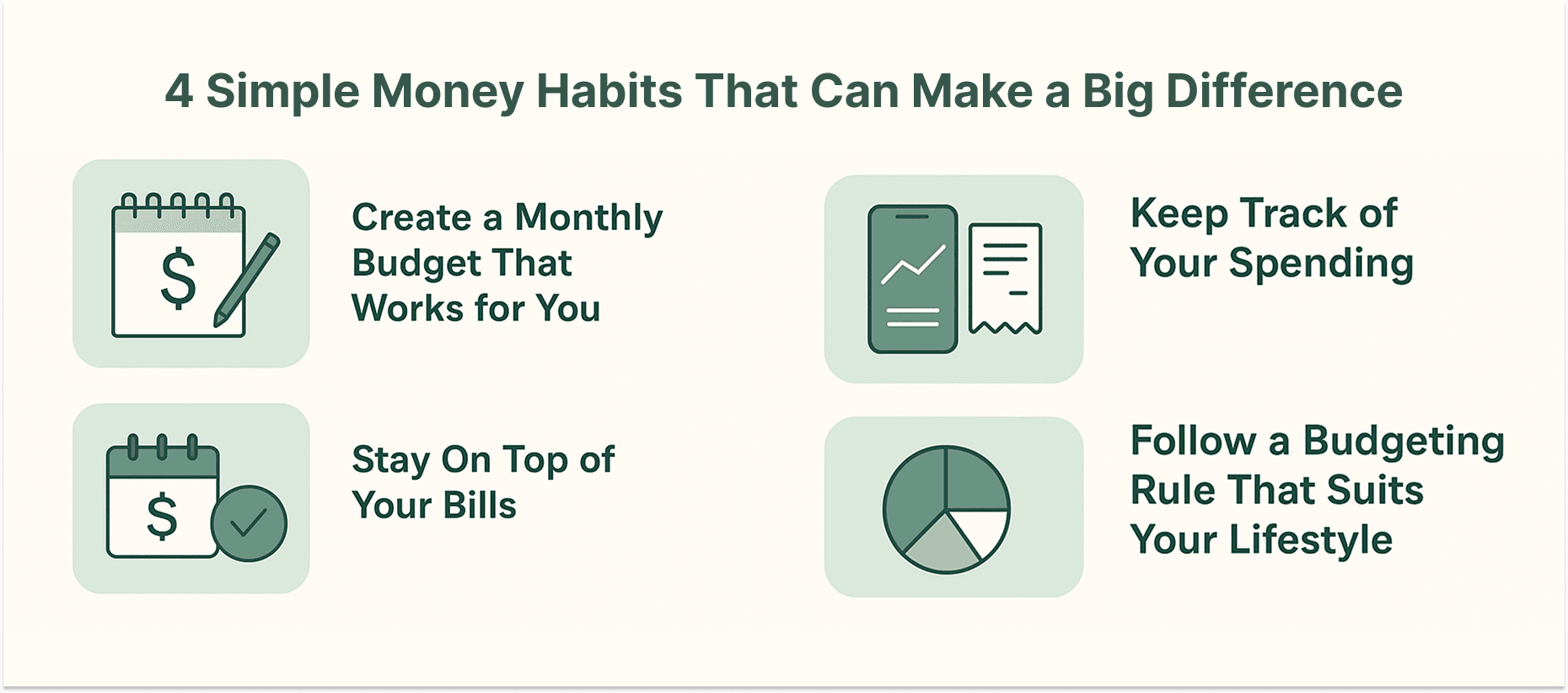
For many, the word "budget" conjures up images of tedious spreadsheets, lost receipts, and feelings of deprivation. We start the month with high expectations, only to abandon our tracking systems by week three because the process feels too demanding. Developing practical personal finance habits to simplify your budget is the key to turning this stressful chore into an effortless, automated background process.
A successful budget is not one that tracks every single penny down to the cent; it is one that you can actually stick to over the long term. In this guide, we will analyze why traditional, highly complex budgeting systems fail, and we will walk through a systematic postmortem of budget collapse. More importantly, we will outline the actionable habits you can implement today to build a sustainable, simplified financial routine.
The Incident Report: Why Complex Budgets Collapse
Most traditional budgeting systems suffer from "feature creep." We try to track 15 different categories, from artisanal coffee to pet toys, expecting that more data will automatically lead to better decisions. Instead, this micro-tracking creates friction. The moment tracking becomes exhausting, we stop doing it entirely, leading to a complete system failure.
According to personal finance guidelines on Wikipedia's personal budget overview, a budget is simply a microeconomic tool to manage your cash flow. It does not require complex software or daily manual entry. When we over-engineer our finances, we set ourselves up for burnout. To understand how to simplify your budget, let us first look at the timeline of how a typical high-friction budget breaks down over a single month.
Timeline of a Classic Budget Collapse
- Day 1: The High-Motivation Launch. You create a fresh spreadsheet with 15 color-coded categories, pledging to log every transaction immediately.
- Day 7: The Micro-Tracking Fatigue. You forget to log three cash transactions. The math does not match your bank account balance, causing initial frustration.
- Day 15: The Categorization Dilemma. You purchase a target run containing both groceries and home decor. Splitting the receipt feels too tedious, so you skip logging it entirely.
- Day 22: Complete Abandonment. Having missed a week of tracking, you feel overwhelmed by the backlog of transactions and declare the budget a failure.
- Day 30: The Post-Mortem Realization. You end the month with no clear idea of where your money went, feeling guilty and resolved to try the exact same high-friction method next month.
Root Cause Analysis: Why We Over-Complicate Cash Flow
The Trap of the Idealized Self
We often build budgets for the person we wish we were, rather than the person we actually are. This psychological disconnect is the primary reason why complex financial systems fail. To fix this, we have to perform a quick "Five Whys" analysis to get to the root of the issue.
- Why did the budget fail? Because I stopped tracking my expenses halfway through the month.
- Why did I stop tracking? Because logging every transaction manually on my phone was too annoying.
- Why was it annoying? Because I had too many categories and had to split receipts constantly.
- Why did I have so many categories? Because I thought I needed granular detail to control my spending.
- Why did I think I needed granular detail? Because I lacked a high-level system to automatically prevent overspending before it happened.
The Cognitive and Financial Impact of Budget Burnout
"The best financial system is the one you do not have to think about. When spending decisions require constant cognitive energy, you run out of willpower before you run out of money."
When your budget requires constant manual intervention, it drains your daily decision-making energy. Financial cognitive fatigue leads directly to impulsive purchases. Because you are exhausted from tracking, you are actually more likely to make poor spending choices later in the day.
Additionally, complex systems create a false sense of control. You might spend hours categorizing your past expenses, but looking backward does not change your future behavior. A simplified budget focuses on proactive guardrails rather than retroactive accounting.
System Diagnostics: High-Friction vs. Simplified Budgeting
Before adopting new habits, it is helpful to compare what works against what fails. Transitioning to a simplified budget means removing administrative overhead and replacing it with structural guardrails.
Below are the contrasts between traditional, high-friction habits and simplified, high-efficiency habits:
- High-Friction: Tracking every transaction manually in a spreadsheet.
- High-Friction: Maintaining 10+ distinct spending categories.
- High-Friction: Checking account balances daily with anxiety.
- High-Friction: Relying on willpower to save money at the end of the month.
- Simplified: Automating transfers to savings and investments on payday.
- Simplified: Grouping expenses into just three categories: Fixed, Savings, and Flexible.
- Simplified: Relying on a weekly 15-minute check-in to adjust course.
- Simplified: Using separate bank accounts to partition your money automatically.
Action Plan: Core Habits to Simplify Your Budget
The following table outlines the foundational habits required to transition from a chaotic, high-maintenance budget to an elegant, simplified financial ecosystem. Implementing even two or three of these habits will drastically reduce your weekly financial workload.
| Habit Name | Core Action | Estimated Setup Time | Monthly Maintenance Time |
|---|---|---|---|
| Pay Yourself First | Automate savings on payday | 30 minutes | 0 minutes |
| The Fixed/Variable Split | Group all spending into 2 major categories | 15 minutes | 10 minutes |
| The 15-Minute Weekly Check-In | Review account balances and adjust weekly cash limit | Weekly schedule | 60 minutes total |
| Account Partitioning | Use separate accounts for bills and fun money | 1 hour | 0 minutes |
| Subscription Decluttering | Cancel unused recurring memberships | 30 minutes | 5 minutes |
Habit 1: Pay Yourself First Through Automation
The most powerful habit you can develop is automating your savings. Instead of saving whatever is left over at the end of the month, you must treat your savings like a non-negotiable bill that gets paid the moment your paycheck arrives.
According to the U.S. Securities and Exchange Commission guidance on smart financial planning, automation removes emotion and discipline from the saving process, making consistency inevitable. Set up automatic transfers from your direct deposit directly into your retirement and high-yield savings accounts.
Habit 2: Use a Simplified Two-Category System
You do not need to know exactly how much you spent on organic kale versus frozen pizza. To simplify your budget, collapse your categories into just two main groups: Fixed Costs (needs) and Flexible Spending (wants).
Defining the Two Buckets
- Fixed Costs: This includes your rent or mortgage, utilities, insurance, loan payments, and basic groceries. These are the expenses that keep your life running safely.
- Flexible Spending: This is your pocket money for dining out, entertainment, hobbies, and shopping. You can spend this category down to zero every month without worrying, because your savings and fixed costs are already taken care of.
Habit 3: Partition Your Accounts to Prevent Accidental Overspending
One of the easiest ways to blow a budget is spending bill money on non-essential items because it is sitting in the same checking account. To solve this, partition your money across multiple dedicated bank accounts.
Create one checking account solely for your fixed bills and mortgage payments. Set all of your recurring bills to autopay from this account. Then, have a separate checking account (or debit card) dedicated entirely to your weekly flexible spending. When the flexible account runs out of money, your spending stops, but your bills are always safely covered in the other account.
Habit 4: Establish the 15-Minute Weekly Review
Ditch the daily financial anxiety and replace it with a single, scheduled weekly review. Pick a low-stress time, like Sunday morning over a cup of coffee, to check in on your accounts.
- Log into your banking apps: Quickly scan your transactions to check for fraudulent charges or billing errors.
- Check your flexible spending balance: See how much money is left in your weekly spending account.
- Adjust for the upcoming week: If you have an expensive dinner scheduled for Thursday, plan to spend less on Monday and Tuesday to balance your cash flow.
- Celebrate small wins: Acknowledge that you are actively managing your financial system without feeling restricted.
Habit 5: Implement a 48-Hour Rule for Non-Essential Purchases
Impulse buying is the enemy of a simplified budget. It introduces unexpected transactions that disrupt your planned cash flow. By introducing a mandatory cooling-off period, you can drastically reduce impulse spending with minimal willpower.
When you find an item you want to buy online or in a store, force yourself to wait 48 hours before purchasing it. Write it down on a list. More than half the time, you will find that the initial emotional urge to buy has passed, and you can remove the item from your list without feeling deprived.
Habit 6: Consolidate Your Financial Footprint
Having five credit cards, three brokerage accounts, and four savings accounts is a recipe for administrative chaos. Consolidating your financial footprint is a fast-track habit to complete budget simplicity.
How to Streamline Your Accounts
- Close unused credit cards: Keep your oldest accounts active to protect your credit score, but close unnecessary retail store cards and secondary credit lines.
- Consolidate retirement accounts: If you have old 401(k) accounts scattered across previous employers, roll them over into a single Individual Retirement Account (IRA).
- Stick to one primary bank: Use a bank that offers excellent online tools, a high-yield savings account, and fee-free checking under one login.
Habit 7: Align Your Budget with Your Core Values
A budget shouldn't feel like a punishment; it should be a tool that helps you fund the life you actually want to live. When you align your spending with your personal values, budgeting stops feeling like a chore and becomes an empowering daily habit.
If you value travel, actively budget for it by cutting back on things you don't care about, such as subscription services or premium car washes. Simplifying your budget means eliminating the grey-area spending—those mindless purchases that don't actually bring you joy—so you have more resources for the experiences and items that truly matter to you.
Preventive Maintenance: Keeping Your Budget Simple
A simple financial system still requires occasional tune-ups. Just like car maintenance, taking time once or twice a year to review your systems prevents major breakdowns down the road. Keep your system running smoothly by focusing on continuous simplification.
- Review automatic subscriptions twice a year: Check for sneaky price increases or unused streaming services and cancel them instantly.
- Adjust your savings rate annually: Every time you get a raise or pay off a debt, increase your automatic savings transfers before you get used to the extra income.
- Keep your tools basic: Avoid the temptation to download the latest trendy financial app if your current simple system of partitioned bank accounts is already working.