
Every January, millions of people set ambitious goals, relying on raw motivation to forge new habits. By February, over 80% of these well-intentioned individuals have abandoned their pursuits. The problem isn't a lack of desire; it's a fundamental flaw in the methodology. In 2026, the personal development landscape has experienced a seismic shift. We are finally moving away from the exhausting "habit obsession" and embracing a far more sustainable approach: building systems.
If you have ever felt depleted by the constant need for willpower, you are not alone. Habits require you to push through resistance every single day. Systems, on the other hand, pull you toward your goals through automated decision-making and engineered environments. This comprehensive guide will show you exactly how to build systems instead of habits, transforming your fleeting bursts of effort into consistent, long-term execution.
The Flawed Psychology of Relying on Habits Alone
For decades, the self-help industry preached that success was simply a matter of repeating an action until it became automatic. However, modern behavioral science reveals that habits are incredibly fragile under stress. When your cognitive load increases—whether from work pressure, family demands, or global uncertainty—your brain defaults to the path of least resistance.
Willpower is a finite resource. Relying on it is like trying to drive a car with an empty gas tank. You might coast for a mile or two using momentum, but you will inevitably stall. Habits debate their actions each day, asking the dreaded question: "Do I really have to do this today?" This internal negotiation drains your energy before you even begin the task. In 2026, where digital distractions are more aggressive than ever, depending on daily motivation is a guaranteed losing battle.
What is a System? (And Why It Trumps a Habit)
A system is simply a set of processes designed to achieve a desired result. Unlike a habit, which is a singular behavior, a system encompasses the environment, the triggers, the actions, and the feedback loops that guarantee progression. When you focus on how to build systems instead of habits, you shift your attention from unpredictable behavioral changes to reliable structural changes.
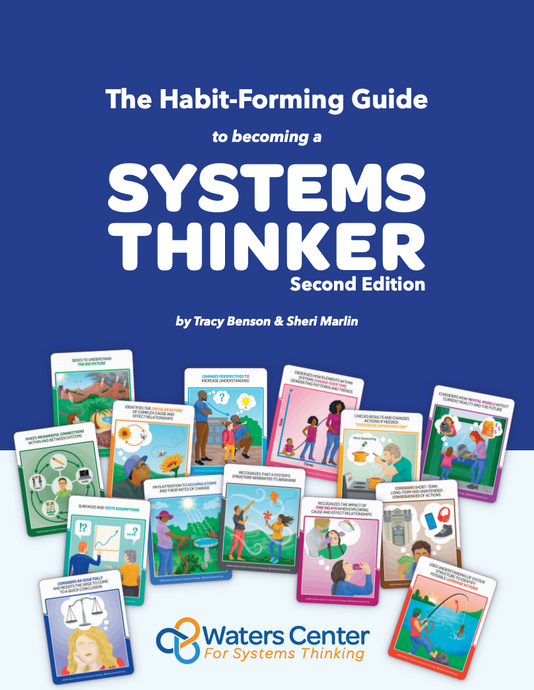
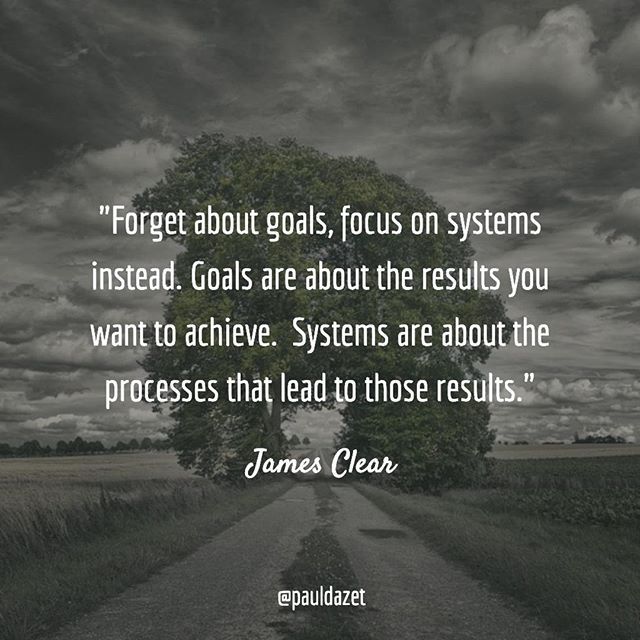
As James Clear famously articulated, goals are singular endpoints or targets, while systems are the daily routines and structures we establish. Our success is determined by our ability to create and maintain a system that aligns with our overall goals. Setting up a system without knowing its purpose is like jumping in a car without knowing where you’re going—you’ll burn a lot of gas but might not get anywhere. But a well-designed system helps you reach your goal without relying on luck, by measuring what works, improving through feedback, and turning intense effort into consistent execution.
Case Study: From Burnout to Automated Success – How Elena Transformed Her Productivity
To truly understand the power of systems over habits, let’s examine a realistic case study from late 2025 into early 2026. Elena, a freelance SaaS content strategist, struggled with severe burnout. Her goal was to write 50,000 words a month to scale her business. Her attempted "habit" was to write 1,600 words every morning before breakfast.
The Challenge
In October 2025, Elena's habit-based approach failed catastrophically. She relied on pure motivation, sitting at her desk each morning hoping the words would flow. Within two weeks, she missed four days due to client emergencies and two days due to simple fatigue. Her adherence rate dropped to 57%, yielding only 28,000 words. She experienced high anxiety, constant guilt, and depleted willpower. The habit was unsustainable because it required her to make a fresh decision to write every single day.
The Methodology & Execution
In January 2026, Elena pivoted to a Systems > Goals framework. She stopped trying to build a "writing habit" and instead built a "Writing Production System." Here was her execution methodology:
- Environment Engineering: Elena dedicated a separate physical office space solely for writing. She removed all social media apps from her phone and used a 2026 AI-blocking router to disable notifications during her designated writing blocks.
- Process Automation: Instead of aiming for a daily word count, she designed a weekly batching system. Mondays were for outlining, Tuesdays and Wednesdays for drafting, Thursdays for editing.
- Feedback Loop Implementation: She tracked her hourly output on a visible dashboard, reviewing her velocity every Friday to adjust the following week's system parameters.
The Results & Metrics
The shift from habit to system yielded dramatic, measurable results. By March 2026, Elena’s adherence rate soared to 98%. Her monthly output increased from 28,000 words to 65,000 words—a 240% increase in production capacity. Most importantly, her self-reported stress levels dropped by 60%. Because the system dictated the action, she no longer required motivation to get things done. The system removed the decision fatigue entirely.
Lessons Learned & Mistakes Made
Elena’s journey wasn’t without initial missteps. In her first week of system design, she created a rigid system that lacked buffer zones. When an unexpected illness knocked her out for two days, her system collapsed because it had no redundancy. The critical lesson learned was that robust systems must include contingency protocols (e.g., a "catch-up" block on Saturday mornings). Systems must be resilient, not just rigid.
Step-by-Step Guide: How to Build Systems Instead of Habits
Building a system requires shifting your mindset from what you want to achieve to how you will reliably achieve it. Here is the blueprint for creating sustainable systems for your life in 2026.
1. Define the Desired Result (The System's Purpose)
A system without a purpose is just a chaotic routine. You must first identify what you want the system to produce. Instead of setting a vague goal like "get fit," define the system's output: "Consistently consume 2,000 calories of whole foods and complete four 45-minute resistance training sessions per week." This clarity turns a wish into a measurable process.
2. Engineer Your Environment for Automatic Discipline
The most crucial step in how to build systems instead of habits is environment design. Disciplined people don’t rely on willpower; they’ve engineered their environment and behaviors so that discipline becomes automatic. If you want to read more, don't build a "reading habit"—build a system where the book is placed on your pillow every morning, and the TV remote is hidden in a drawer. Make the right action the easiest action.
3. Build the Feedback Loop (Measure What Works)
Systems thrive on data. Without feedback, you cannot improve. You must establish metrics that tell you if your system is functioning correctly. If your system is designed to generate $10,000 a month in freelance income, your feedback loop should track weekly outreach emails, conversion rates, and project completion times. Review these metrics weekly. If the system underperforms, adjust the process, not your effort.
4. Replace Motivation with Automated Decision-Making
To sustain your personal development, you should focus on creating systems instead of goals to eliminate the need for motivation. Use "if-then" programming to automate your choices. For example: "If it is 7:00 AM, then I will review my system dashboard." "If I feel distracted, then I will put my phone in the other room." By pre-deciding your actions, you bypass the brain's tendency to negotiate and procrastinate.
The Holy Trinity of Practical Self-Discipline
When building systems, it is vital to understand the interplay between three distinct concepts: habits, routines, and rituals. These are not opposing forces; rather, they are the components that make up a robust system. Together, they form the holy trinity of practical self-discipline.
- Habits (The Micro Level): These are the small, automatic behaviors baked into your system. Tying your shoes before a run is a habit. They require minimal cognitive effort and serve as the low-level gears of your machinery.
- Routines (The Macro Level): Routines are the structured sequences of habits. Your morning routine might include hydrating, reviewing your system metrics, and executing a 30-minute focus block. Routines provide the structural timeline for your system.
- Rituals (The Psychological Level): Rituals add emotional weight and intentionality to routines. Lighting a specific candle before a deep work session or doing a three-minute breathing exercise before a negotiation acts as a psychological primer. Rituals signal your brain that it is time to engage with the system.
By combining these three elements, you create a system that is mechanically reliable, structurally sound, and psychologically compelling. You don’t debate your actions each day; the system triggers the habit, guides the routine, and the ritual primes your mind for execution.
Overcoming the 3 Most Common System-Building Mistakes
As you learn how to build systems instead of habits, you will likely encounter a few pitfalls. Recognizing these ahead of time will save you months of frustration.
- Mistake: Over-Complexity. Many people try to design a NASA-level system for waking up at 6 AM. They track 15 variables and create 20 rules. Result: The system itself becomes a burden, causing abandonment. Solution: Start with a minimum viable system (MVS). Track one metric and follow one rule.
- Mistake: Ignoring System Friction. If your system requires you to drive 30 minutes to a specialized gym, the friction is too high. Bad days will destroy your consistency. Solution: Reduce friction ruthlessly. Switch to a home gym or a gym within 5 minutes of your daily route.
- Mistake: Confusing the Goal with the System. Saying "My system is to lose 20 pounds" is just a goal wearing a disguise. A system dictates the process—the daily caloric deficit and the scheduled workout blocks. Solution: Always define the inputs and processes, not just the outputs.
The Future Outlook: Systems Thinking in 2026 and Beyond
The shift from habits to systems is not just a personal productivity hack; it is a fundamental evolution in how we approach human performance. In 2026, AI integration and smart environment design are taking systems to unprecedented levels. Smart homes can automatically adjust lighting and temperature to optimize focus blocks. AI calendar assistants can dynamically reschedule system routines when unexpected interruptions occur, preserving the system's integrity without requiring manual intervention.
As technology continues to reduce the friction of executing our processes, the emphasis will move entirely away from forcing behavior and toward designing intelligent environments. The people who thrive in this new era will be those who master systems architecture, treating their lives like an optimized, self-correcting engine rather than a constant test of emotional endurance.
FAQ: Building Systems Instead of Habits
Q1: Does building systems mean I shouldn't set goals? A1: No. Goals are still valuable for determining the direction of your system. As James Clear suggests, goals are good for setting the compass, but systems are what actually propel the ship forward. You set a goal once, but you live inside your system daily.
Q2: How long does it take to build a functional system? A2: Unlike habits, which can take 21 to 66 days to form, a basic system can be implemented instantly. You can decide today to block social media during work hours and set up an if-then rule. However, optimizing a system through feedback loops usually takes 4 to 8 weeks of iterative testing.
Q3: What if my system fails on a particular day? A3: This is where systems outshine habits. A missed habit breaks the chain and causes guilt. A failed system simply generates data. You review what went wrong (e.g., an unexpected meeting disrupted your morning block), adjust the system parameters (e.g., shift that block to the afternoon), and continue. Systems are resilient; habits are brittle.
Q4: Can I still use habit-tracking apps if I am focusing on systems? A4: Yes, but flip their purpose. Instead of tracking whether you "didn't break the chain," use the app to track system metrics. Track your output (words written, sales calls made) rather than just binary completion. Use the data to optimize your system's engine.
Q5: How do I build a system when my schedule is highly unpredictable? A5: Unpredictable schedules require modular systems. Instead of one rigid daily routine, build modular blocks (e.g., a 15-minute focus block, a 45-minute deep work block, a 30-minute learning block). When your day shifts unexpectedly, you simply rearrange the modules rather than abandoning the system entirely.
Conclusion
The era of relying on sheer willpower and daily motivation is over. If you have spent years trying to build habits and failing, it is not because you are lazy or undisciplined. It is because you were using the wrong tool for the job. Habits demand perfection; systems demand progression.
By learning how to build systems instead of habits, you shift from a world of unpredictable bursts of effort to a reality of consistent action. You stop debating your behaviors each day and start engineering your environment so that discipline becomes automatic. Whether you want to scale a business, optimize your health, or master a new skill in 2026, the solution lies not in what you do with your willpower, but in what you design with your systems. Build the system, and the results will take care of themselves.