
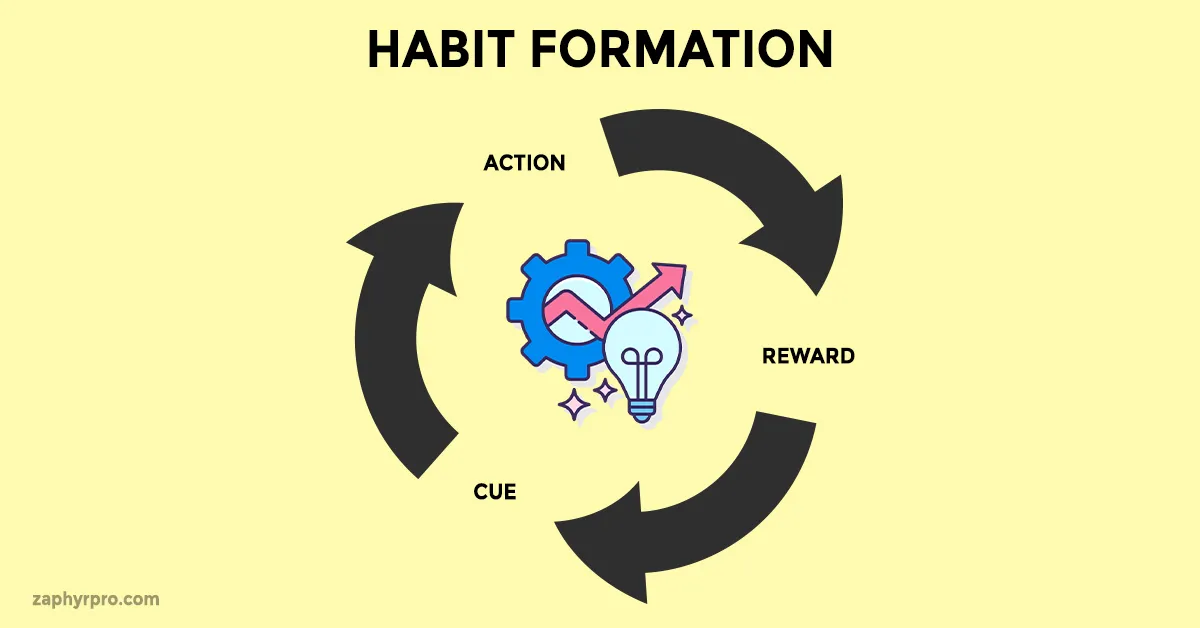
Every morning, you wake up, reach for your phone, brush your teeth, and grab a coffee. You likely don’t think about these actions; you just perform them. This invisible architecture of your daily life is what we call habit formation. While it might feel like a series of simple choices, your brain is actually running a complex, high-efficiency program designed to conserve energy.
As we move through 2026, our understanding of the neural mechanisms behind these behaviors has reached a new level of precision. We no longer rely on the outdated "21-day myth." Instead, we recognize that habit formation is a nuanced, variable process that involves the basal ganglia, complex reward loops, and environmental design. If you want to change your life, you don't need more willpower; you need a better understanding of how your brain automates your reality.
The Neuroscience Behind Why Habits Stick
To truly master your behavior, you have to look under the hood of your own consciousness. When you learn a new skill—like playing an instrument or learning a new language—the prefrontal cortex (the area responsible for conscious thought and decision-making) is firing rapidly. You are paying attention to every movement.
The Shift to Automaticity
As you repeat an action, your brain works to offload that task from the energy-heavy cortex to the basal ganglia. This structure, located deep within the brain, is a master of pattern recognition and procedural memory. Once a behavior is "chunked" or stored in the basal ganglia, it becomes automatic.
This is the holy grail of efficiency. By offloading these routines to a deeper part of the brain, your prefrontal cortex is freed up to handle complex problem-solving. This is why you can drive a car home from work while mentally drafting an email—your brain is running a pre-programmed script.
The Role of Dopamine
Dopamine is often misunderstood as a "pleasure chemical," but in the context of habit formation, it is actually a prediction error signal. When you encounter a cue, your brain releases dopamine in anticipation of the reward. If you get the reward, the loop is reinforced. Over time, the craving for that dopamine spike is what drives the behavior, not necessarily the enjoyment of the activity itself. This is why bad habits are so difficult to break; your brain is literally wired to crave the loop.
The Three-Part Habit Loop: Breaking Down the Anatomy
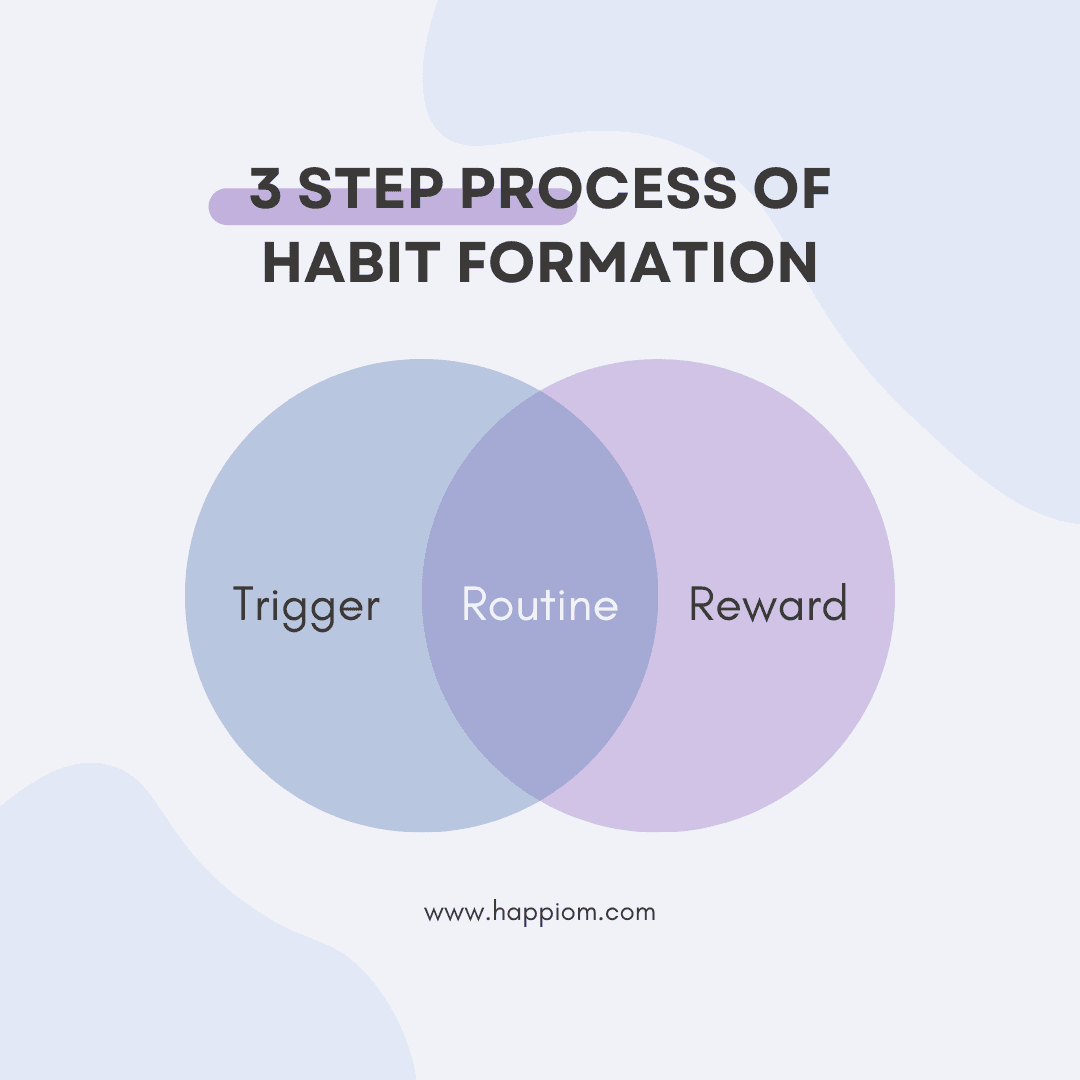
Every habit, whether good or bad, follows a fundamental structure. If you want to build a new routine or dismantle an old one, you must map it against these three components:
- The Cue: This is the trigger. It could be an external stimulus (a notification on your phone) or an internal state (feeling stressed or bored).
- The Routine: This is the behavior itself. It’s the action you take once the cue has signaled your brain to act.
- The Reward: This is the benefit you receive. It’s the reason your brain decides the behavior is worth remembering and repeating.
Why Most People Fail
Most people try to change their habits by focusing on the routine. They say, "I will stop eating sugar" or "I will run every day." However, they ignore the cue and the reward. If your cue for eating sugar is "feeling stressed at 3 PM," and you don't change how you handle that stress, you will eventually return to the sugar habit.
Successful habit formation in 2026 is about environmental design. By modifying the cues in your environment, you make the desired behavior the path of least resistance.
The Real Timeline of Habit Formation
Let’s put the "21-day myth" to rest once and for all. Research indicates that the time it takes for a behavior to become automatic varies wildly based on the complexity of the task and the individual's environment.
- The Range: Studies suggest that habit formation takes anywhere from 18 to 254 days.
- The Average: The most cited statistical average is approximately 66 days.
If you haven't formed a habit in three weeks, don't feel like a failure. You are simply engaging in a neurological process that requires persistence. In 2026, we emphasize consistency over intensity. Doing a small, manageable version of your habit every single day is far superior to doing an intense, hour-long session once a week.
Strategies for Building Better Habits in 2026
To design behaviors that stick, you need to be strategic. Here are four evidence-based techniques to optimize your personal growth.
1. Habit Stacking
The concept of "habit stacking" involves anchoring a new behavior to an existing one. Instead of trying to force a new habit into your day, find a current "anchor" habit—like brushing your teeth—and attach the new behavior immediately after.
- Formula: "After I [Current Habit], I will [New Habit]."
- Example: "After I pour my morning coffee, I will write down my top priority for the day."
2. Environmental Friction
You can "design" your environment to work for or against you. If you want to read more, place a book on your pillow in the morning. If you want to stop checking your phone, put it in another room. By increasing the friction for bad habits and decreasing it for good ones, you align your environment with your goals.
3. The Power of Micro-Habits
The biggest barrier to habit formation is often the "activation energy" required to start. By starting with a "micro-habit"—a version of the task that takes less than two minutes—you bypass your brain's natural resistance to change. If you want to exercise, commit to doing just one push-up. Once you start, the brain usually wants to continue, but the hardest part is simply the initial step.
4. Leveraging Data and Technology
In 2026, we have more tools than ever to track our behavioral data. Wearable devices and habit-tracking apps provide objective feedback on our performance. Using these tools to monitor your consistency can provide the necessary social or personal validation that serves as a secondary reward, further cementing the habit loop.
Breaking Bad Habits: A Scientific Approach
Breaking a habit is not the same as deleting a file from a computer. Because habits are stored in the basal ganglia, they don't simply disappear. Instead, you have to replace the routine within the existing loop.
- Identify the Cue: Keep a journal for a few days. When you feel the urge to perform the bad habit, note the time, the environment, and your emotional state.
- Experiment with Rewards: If you eat a cookie because you are bored, maybe a short walk or a quick conversation with a colleague can provide a similar distraction (reward) without the sugar.
- Change the Routine: Once you know the cue and the reward, try to swap the routine for something that satisfies the same craving but serves your long-term goals.
Remember, the goal is not to eliminate the cue, but to change the response. If you try to fight the cue entirely, you will likely encounter "relapse triggers" that make the old habit surge back with intensity.
Frequently Asked Questions
Is it true that it only takes 21 days to form a habit?
No. That is a persistent myth. Scientific studies show that habit formation is highly variable, ranging from 18 to 254 days, with an average of about 66 days for most people.
Can I form multiple habits at once?
While it is theoretically possible, it is not recommended. Habit formation requires significant cognitive energy during the initial "conscious phase." Trying to change too many things at once usually leads to decision fatigue and eventual burnout. Focus on one keystone habit at a time.
Why do I keep failing to stick to my new routines?
Failure usually stems from ignoring the "habit loop." If you are not seeing results, you are likely failing to identify the correct cue or providing a reward that your brain doesn't actually value. Re-evaluate your triggers and ensure your reward is immediate and satisfying.
Does the basal ganglia ever "forget" a habit?
Not exactly. The neural pathways associated with a habit remain, but they can be weakened through disuse. This is why "relapse" is common—if you return to an old environment or trigger, the brain can quickly reactivate those dormant pathways.
Conclusion
Habit formation is the most powerful tool you have for self-improvement. By understanding the interplay between the prefrontal cortex and the basal ganglia, you stop fighting your biology and start working with it. In 2026, the path to success isn't about grand gestures or intense bursts of motivation; it’s about the quiet, consistent application of the habit loop.
Design your environment, stack your habits, and be patient with your brain's timeline. You are not just building routines; you are building the architecture of your future self. Start small, stay consistent, and let the science of automaticity do the heavy lifting for you.
References
- ScienceInsights — How Is a Habit Formed? The Brain Science Explained, 2026
- ScienceNewsToday — Why Habits Stick: The Hidden Psychology of Habit Formation, 2026
- Positive Psychology — The Psychology of Habit Formation: Scientifically Reviewed Insights, 2025
- Oxford Research Encyclopedia — Habit Formation and Behavior Change: A Comprehensive Analysis
- Behavioral Research Institute — The Neuroscience of Habit Formation in 2026: Advances and Practical Applications
- Journal of Behavioral Economics — Longitudinal Studies on Persistence and Habit Persistence, 2026