
In a world that often demands radical transformation, the most effective path to personal evolution is found in the quiet, consistent power of Daily Self-improvement Tips That Actually Work. You don’t need to overhaul your entire life overnight to see meaningful results. In fact, research consistently shows that small, incremental 1% improvements compound over time to create life-changing outcomes. Whether you are looking to boost your productivity, sharpen your intellect, or cultivate a more resilient mindset, the key lies in building sustainable systems rather than relying on fleeting motivation.
What is Daily Self-Improvement?
At its core, Daily Self-improvement Tips That Actually Work involve the practice of engaging in intentional, repeatable habits that sharpen your focus, health, and emotional intelligence. These personal development strategies are designed for consistent growth. By shifting your perspective from "perfection" to "capability," you move away from the trap of procrastination and toward a life of consistent growth. In 2026, the focus has shifted toward systems-based habits—a method that ensures progress continues even when your initial motivation fades.
Why Small Habits Outperform Big Overhauls
Research from Duke University indicates that over 40% of our daily actions are driven by habit, not conscious decision-making. By hacking these existing neural pathways, you can automate your success. Trying to change everything at once usually leads to burnout; however, focusing on tiny, intentional actions, which are key Daily Self-improvement Tips That Actually Work, allows you to build momentum without feeling overwhelmed.
- Sustainability: Small habits are easy to maintain, fitting seamlessly into your current schedule. These are among the most practical Daily Self-improvement Tips That Actually Work.
- Identity Building: Every time you complete a small, positive action, you reinforce the belief that you are the type of person who shows up for yourself.
- Compound Growth: Just as interest compounds in a bank account, your daily efforts compound to create massive long-term shifts in your career, relationships, and well-being.
The Foundation: Starting Your Day with Purpose
Your morning routine acts as the anchor for your entire day, and is one of the most effective Daily Self-improvement Tips That Actually Work. If you start with intention, you prime your brain for high-level productivity and emotional regulation. Many find incorporating specific productivity hacks into their mornings can amplify these effects. In 2026, experts recommend focusing on morning rituals that elevate energy levels rather than just checking off a to-do list.
Designing an Effective Morning Routine
A powerful routine doesn't need to take hours. Even 15 minutes of structured time, when applied as part of Daily Self-improvement Tips That Actually Work, can significantly enhance your emotional well-being and focus. Consider incorporating these elements:
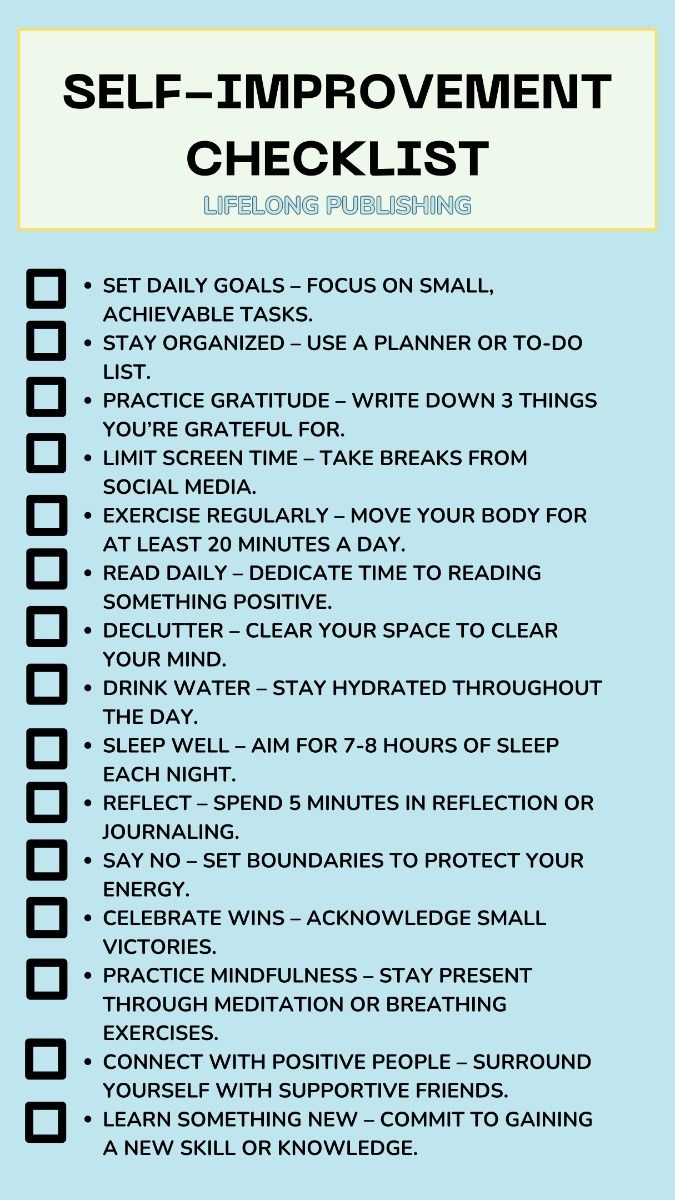
- Mindful Movement: Stretching or light exercise to wake up your body and increase blood flow.
- Gratitude Practice: Spending two minutes reflecting on what you are grateful for shifts your mindset toward abundance.
- Daily Goal Setting: Clearly defining your top three priorities for the day helps you avoid the "busy work" trap.
The Power of Goal Setting for Personal Growth
Daily goal setting is the cornerstone of consistent self-improvement, and one of the most impactful Daily Self-improvement Tips That Actually Work. By using a structured goal setting framework, such as a to-do list or a daily goal tracker, alongside effective time management techniques, you create a roadmap that eliminates chaos. The trick is to prioritize tasks by their importance and the effort required, ensuring you celebrate small victories along the way to maintain your motivation.
Sharpening Your Mind: Continuous Learning Strategies
The foundation of self-improvement begins with expanding your knowledge base, a core principle of Daily Self-improvement Tips That Actually Work. Intellectual growth isn't just about reading more; it’s about hybrid learning—combining books, courses, and practical application.
Reading and Intellectual Expansion
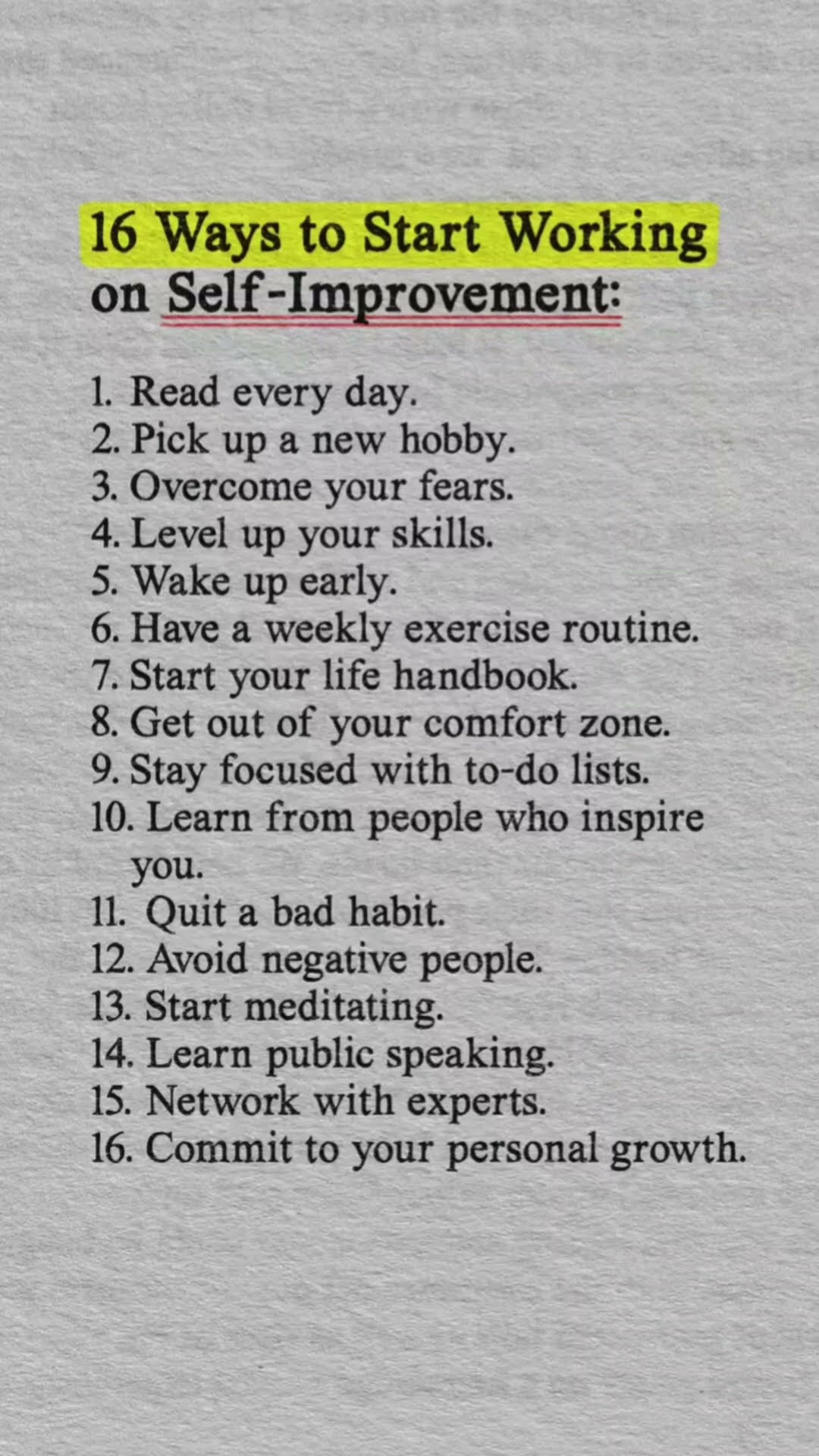
Reading is a concentrated source of wisdom. By committing to a daily reading habit, one of the most effective Daily Self-improvement Tips That Actually Work, you expose yourself to new perspectives and vocabulary. Research suggests that regular reading helps keep the mind sharp, slows cognitive decline, and improves memory function.
Why You Should Pick Up a New Hobby
Expanding your horizons through a hobby—whether it is pottery, Italian cooking, or learning a new language—stretches you physically, mentally, and emotionally. Learning a new skill forces your brain to create new neural pathways, which is essential for long-term cognitive health, and a fun way to apply Daily Self-improvement Tips That Actually Work.
Cultivating a Growth Mindset in 2026
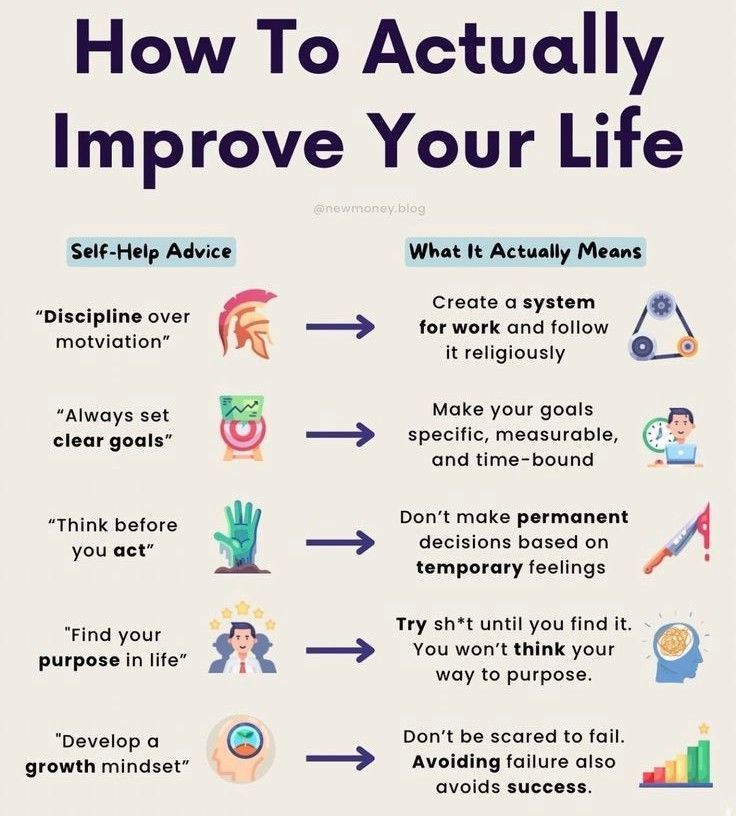
Your beliefs about your ability to grow define your success, making mindset a crucial part of Daily Self-improvement Tips That Actually Work. Achieving a genuine mindset shift encourages you to view challenges as opportunities rather than roadblocks. By shifting your internal dialogue from "I can't" to "I can improve," you are actively building resilience necessary to overcome life's inevitable setbacks.
Using Failure as Data
One of the most important shifts in modern self-improvement is the transition from fearing failure to using it as valuable data. When something doesn't go as planned, analyze what went wrong, adjust your strategy, and try again – this is one of the most powerful Daily Self-improvement Tips That Actually Work.
Practicing Positive Self-Talk
The way you speak to yourself dictates your emotional strength. Replacing negative thoughts with encouraging, solution-focused statements can boost your confidence and reduce stress, a key component of Daily Self-improvement Tips That Actually Work. Pro-tip: Write down three "wins" at the end of each day, no matter how small they seem. This habit reinforces progress-oriented thinking and helps you focus on your momentum rather than your shortcomings.
Physical Well-being as a Productivity Catalyst
Your physical health is the engine that drives every other area of your personal growth, and a fundamental aspect of Daily Self-improvement Tips That Actually Work. Incorporating consistent self-care practices is vital for overall well-being. You cannot expect to perform at your peak if your body is operating on low energy, poor nutrition, or lack of rest. In 2026, the focus has shifted from "punishing" exercise to sustainable movement that supports long-term metabolic and mental health.
The Role of Consistent Movement
Regular exercise is not just about aesthetics; it is a powerful tool for neuroplasticity and emotional regulation. Even 20 minutes of daily activity, a simple yet effective one of the Daily Self-improvement Tips That Actually Work, can trigger the release of endorphins and brain-derived neurotrophic factor (BDNF), which aids in cognitive clarity (Source 5).
- Micro-workouts: If you are short on time, break your exercise into three 10-minute segments throughout the day.
- Active Recovery: Incorporate walking or light yoga on your "off" days to keep blood flow steady without stressing the nervous system.
- The "Motion Precedes Emotion" Rule: Don't wait to feel like working out. Start the movement, and the motivation to continue will follow.
Nutrition and Cognitive Performance
What you consume directly impacts your ability to focus and maintain stable energy throughout the day, highlighting the importance of nutrition among Daily Self-improvement Tips That Actually Work. Moving away from processed sugars and toward whole-food nutrition provides the steady fuel your brain requires for complex problem-solving.
- Hydration Habits: Start your morning with a large glass of water to rehydrate after sleep, which can immediately improve brain function and alertness.
- Blood Sugar Stability: Focus on high-protein breakfasts to avoid the mid-morning energy crash that often kills productivity.
- Mindful Eating: Slowing down your eating process allows your brain to register satiety signals, preventing the overeating that leads to lethargy.
Emotional Intelligence and Relationship Building
Self-improvement is not a solitary endeavor. Your interactions with others serve as a mirror for your own personal growth. By enhancing your emotional intelligence (EQ) and developing strong emotional regulation skills, you improve the quality of your professional and personal relationships, a vital part of Daily Self-improvement Tips That Actually Work.
Mastering Active Listening
Most people listen with the intent to reply, not the intent to understand. Practicing active listening is a high-leverage skill that builds trust and fosters deeper connections, and one of the most impactful Daily Self-improvement Tips That Actually Work for improving relationships.
- Wait for the Pause: Allow the other person to finish their thought completely before you formulate your response.
- Reflective Mirroring: Briefly summarize what you heard the other person say to ensure you have interpreted their message correctly.
- Non-Verbal Cues: Maintain eye contact and keep an open posture to signal that you are fully present.
Setting Healthy Boundaries
Part of growing as an individual involves knowing what to say "no" to. Setting boundaries is essential for protecting your time and mental bandwidth, a crucial element of Daily Self-improvement Tips That Actually Work.
- Prioritize Your "Yes": If a request does not align with your core goals or values, it is okay to decline politely.
- Communicate Clearly: Use "I" statements to explain your needs (e.g., "I need to focus on this project during these hours to ensure I deliver my best work").
- Consistency is Key: Boundaries only work if you enforce them consistently. People will eventually respect the parameters you set for your time.
Financial Well-being and Intentional Living
Financial stress is one of the biggest inhibitors of personal development. When you are constantly worried about money, your brain remains in a "survival mode" that makes it nearly impossible to focus on long-term growth. Developing a proactive financial strategy is a form of self-care, and one of the practical Daily Self-improvement Tips That Actually Work for reducing stress.
The Art of Micro-Budgeting
You don't need a complex accounting degree to take control of your finances. Simple, consistent tracking is more effective than an occasional, intense overhaul, making it one of the most accessible Daily Self-improvement Tips That Actually Work.
- Automate Savings: Set up automatic transfers to your savings or investment accounts on payday. This "pay yourself first" mentality ensures growth even when you are busy.
- Audit Your Subscriptions: Review your monthly recurring charges every quarter. Eliminating unused subscriptions can free up significant capital for higher-impact investments like learning or health.
- The 24-Hour Rule: For non-essential purchases, wait 24 hours before buying. This simple delay helps distinguish between a genuine need and an impulsive desire.
Investing in Intellectual Capital
The best investment you can make is in your own skill set, a powerful example of Daily Self-improvement Tips That Actually Work. In the current economic landscape, your ability to learn and adapt is your most valuable asset (Source 3).
- Skill Stacking: Combine two or more skills to create a unique value proposition. For example, if you work in marketing, learning data analytics can make you significantly more effective than your peers.
- Online Course Utilization: Platforms for continuous education allow you to learn directly from experts in any field. Dedicate just one hour a week to mastering a new technical or soft skill.
Optimizing Your Environment for Success
Your environment acts as a "silent partner" in your self-improvement journey. If your surroundings are cluttered, your mind will often follow suit. By designing an environment that encourages the behaviors you want to see, you reduce the "friction" required to act, a clever application of Daily Self-improvement Tips That Actually Work.
Creating a Focus-Friendly Workspace
Whether you work from home or in an office, your environment should facilitate deep work rather than distraction, a key principle among Daily Self-improvement Tips That Actually Work.
- Digital Hygiene: Clear your desktop and organize your files. A clean digital workspace reduces cognitive load and allows you to find what you need faster.
- Ergonomics Matter: Invest in a comfortable chair or an adjustable desk. Physical discomfort is a major source of subconscious distraction.
- The "Single Task" Zone: If possible, keep your workspace clear of anything not related to your current task. This physical separation helps your brain switch into "work mode" more efficiently.
Eliminating Decision Fatigue
Decision fatigue is the psychological phenomenon where the quality of your decisions deteriorates after a long period of decision-making. You can mitigate this by automating your choices, one of the smart Daily Self-improvement Tips That Actually Work.
- Plan the Night Before: Choose your outfit, pack your bag, and outline your top three tasks for the following morning. This preserves your morning energy for high-value tasks.
- The Uniform Approach: Limit the number of daily choices you have to make regarding small things, like meals or clothing, to save your mental energy for big goals.
- Batching Tasks: Group similar activities together—such as answering all emails at once or doing all administrative tasks on one day—to minimize the cost of "context switching."
The Science of Habit Stacking
Habit stacking is one of the most effective ways to introduce new behaviors into your life, and a highly recommended one of the Daily Self-improvement Tips That Actually Work. The concept, popularized by behavioral researchers, involves anchoring a new habit to an existing, well-established one (Source 2).
How to Build Your First Habit Stack
To create a stack, follow this formula, which is a practical application of Daily Self-improvement Tips That Actually Work: "After [Current Habit], I will [New Habit]."
- Example 1: After I pour my first cup of coffee, I will write down three things I am grateful for.
- Example 2: After I sit down at my desk, I will open my task list and identify the one "must-win" objective for the day.
- Example 3: After I brush my teeth at night, I will read one page of a book.
Why Stacking Works
Because your brain has already formed neural pathways for your existing habits, "piggybacking" a new habit onto an old one uses the momentum of the established pattern. This significantly lowers the barrier to entry, making it much easier to stay consistent during busy or stressful weeks, which is why it's one of the most reliable Daily Self-improvement Tips That Actually Work.
Mindfulness and Mental Resilience
In a world of constant connectivity, the ability to disconnect and reflect is a competitive advantage. Mindfulness and self-reflection are not just abstract concepts; they are practical tools for maintaining mental stability under pressure, and essential Daily Self-improvement Tips That Actually Work. These also include powerful stress reduction methods.
Practicing Daily Reflection
Reflection allows you to learn from your experiences rather than just repeating them, making it one of the most profound Daily Self-improvement Tips That Actually Work. Without it, you are doomed to make the same mistakes repeatedly.
- The Evening Review: Take five minutes at the end of each day to ask: "What went well today?" and "What is one thing I could do differently tomorrow?"
- Journaling for Clarity: Use a journal to dump your thoughts. This externalizes your internal monologue, making it easier to identify patterns in your behavior or stressors that are holding you back.
- Focus on Process, Not Outcome: When reflecting, focus on the quality of your effort rather than the immediate result. This builds long-term resilience because you learn to value the work itself.
Managing Stress through Controlled Breathing
When you feel overwhelmed, your body's "fight or flight" response is likely activated. You can override this by using specific, science-backed breathing techniques, which are powerful Daily Self-improvement Tips That Actually Work for stress management.
- The 4-7-8 Technique: Inhale for 4 seconds, hold for 7 seconds, and exhale for 8 seconds. This rhythm signals to your nervous system that you are safe, lowering your heart rate almost instantly.
- Box Breathing: Used by high-performers and emergency responders, this involves inhaling, holding, exhaling, and holding for 4 seconds each. It is an excellent way to regain focus before a high-stakes meeting.
Overcoming Procrastination with Micro-Actions
Procrastination is rarely about laziness; it is almost always about emotional regulation. We procrastinate because a task feels daunting, boring, or anxiety-inducing. The best way to move past this is to break the task down until it is so small that it feels impossible to fail, a core strategy among Daily Self-improvement Tips That Actually Work.
The "Five-Minute Rule"
If you find yourself avoiding a task, commit to doing it for only five minutes. Usually, the hardest part is simply starting. Once you have initiated the action, the "Zeigarnik Effect"—a psychological phenomenon where our brains prefer to finish what we've started—will often kick in, helping you continue well past the five-minute mark. This is one of the most effective Daily Self-improvement Tips That Actually Work for beating procrastination.
Breaking Down Large Projects
Large, abstract goals are paralyzing. You need to translate them into tangible, actionable steps, which is a fundamental principle of Daily Self-improvement Tips That Actually Work.
- Deconstruction: Instead of "Write book," your task should be "Write 200 words on Chapter 1."
- Focus on the Next Step: Don't look at the whole mountain. Just look at the next foothold.
- Celebrate Micro-Wins: Acknowledging the completion of a small task provides a dopamine hit that fuels the next step.
Cultivating a Growth-Oriented Social Circle
You are the average of the five people you spend the most time with. The quality of your social interactions has a profound impact on your mindset, your habits, and your ultimate trajectory, making it a key area for Daily Self-improvement Tips That Actually Work.
Assessing Your Influence
Take an honest look at your current circle. Are the people around you encouraging your growth, or are they keeping you stuck in old patterns? This assessment is crucial for applying Daily Self-improvement Tips That Actually Work.
- Seek Out Mentors: Find people who are where you want to be. You don't need a formal mentorship; simply observing their habits and asking for advice can be transformative.
- Join Communities of Practice: Whether it's a local hobby group, an online course community, or a professional networking group, surrounding yourself with people who value growth creates a "rising tide" effect.
- Boundary-Setting with Naysayers: You don't have to cut people off, but you can limit your time with those who constantly drain your energy or discourage your efforts toward self-improvement.
The Value of Accountability
Having an accountability partner is a proven strategy for increasing completion rates on goals, and one of the most powerful Daily Self-improvement Tips That Actually Work.
- Shared Goals: Partner with someone who is also working on their own growth.
- Weekly Check-ins: A simple weekly call or text to discuss progress and challenges keeps you honest and provides an opportunity to celebrate wins together.
- Reciprocity: Offer to be an accountability partner in return. Supporting others in their growth journey will often provide you with insights into your own.
The Role of Rest and Recovery
In the hustle culture of the past, rest was seen as the enemy of productivity. In 2026, we recognize that rest is a form of work, and an often-overlooked aspect of Daily Self-improvement Tips That Actually Work. Your brain and body need downtime to consolidate learning, repair tissue, and reset your emotional baseline.
Prioritizing High-Quality Sleep
Sleep is non-negotiable for cognitive performance, making it one of the most critical Daily Self-improvement Tips That Actually Work. It is during sleep that your brain cleanses itself of metabolic toxins and solidifies the lessons of the day.
- Consistent Sleep Windows: Try to go to bed and wake up at the same time every day, even on weekends. This regulates your circadian rhythm.
- The "No-Screen" Hour: Avoid blue light from phones and computers for at least an hour before bed. The light interferes with melatonin production, making it harder to fall into deep, restorative sleep.
- Cool and Dark: Create a sleep environment that is cool and dark. These conditions are biologically optimized for deep rest.
Strategic Downtime
Rest doesn't always mean sleeping. It can mean engaging in activities that allow your mind to wander and "de-stress." These are important Daily Self-improvement Tips That Actually Work for mental health.
- Nature Walks: Spending time in nature has been shown to reduce cortisol levels and improve mood.
- Creative Play: Engaging in activities that have no "goal" or "purpose" other than enjoyment can spark creativity and reduce burnout.
- Mindful Disconnection: Dedicate blocks of time where you are completely unreachable by phone or email. This gives your brain the space it needs to reset its focus.
Aligning Your Actions with Your Values
Personal growth is most sustainable when it is tethered to your core values, a foundational principle for Daily Self-improvement Tips That Actually Work. If you are chasing goals that don't align with who you truly are, you will eventually burn out, no matter how disciplined your habits are.
Identifying Your Core Values
Take time to define the three to five values that matter most to you, as this clarity underpins all Daily Self-improvement Tips That Actually Work. Are they things like "Freedom," "Integrity," "Innovation," or "Connection"?
- Value-Based Goal Setting: Whenever you set a new goal, ask yourself, "Does this serve my core values?" If the answer is no, reconsider why you are pursuing it.
- The "Audit" Method: Look at your calendar and your bank account. Do they reflect your stated values? If you say you value health, but you spend no time or money on it, there is a misalignment that needs to be addressed.
- Living Your Values: Self-improvement isn't just about adding things to your life; it's about aligning your daily actions with the person you want to become.
Embracing the Long Game
Growth is not a linear process. You will have days where you feel like you are backsliding, and that is perfectly normal. The key is to maintain your commitment to the daily process rather than the outcome, which is a hallmark of Daily Self-improvement Tips That Actually Work.
- Patience with Yourself: Be as kind to yourself as you would be to a friend who is trying to learn something new.
- Consistency Over Intensity: One moderate workout per day for a year is infinitely better than one intense, week-long boot camp that leaves you exhausted.
- The "1% Better" Mentality: Focus on making your current self slightly more capable, slightly more mindful, and slightly more resilient than your past self. Over a lifetime, this approach will lead to results that most people will find unrecognizable.
Mastering the Art of Habit Maintenance
Building a habit is only the first step. Maintaining it through the seasons of life—when you are busy, stressed, or traveling—is where the real growth happens. The most successful individuals don't have "perfect" routines; they have resilient systems that can bend without breaking, a testament to the power of Daily Self-improvement Tips That Actually Work.
The "Never Miss Twice" Rule
Life will inevitably interfere with your plans. You will have days where you miss your workout, forget to journal, or skip your reading. This is not a failure, provided it doesn't become a pattern, and understanding this is one of the practical Daily Self-improvement Tips That Actually Work.
- The First Miss: Accept it. It's a data point, not a catastrophe.
- The Second Miss: This is the beginning of a new, negative habit. Do whatever is necessary to break the cycle immediately.
- Resetting: If you miss two days, make your priority on the third day to get back on track, no matter how small the action.
Adjusting for Seasonality
Your energy levels and time availability will fluctuate throughout the year. Your routines should be modular, not rigid, which is a smart approach for applying Daily Self-improvement Tips That Actually Work consistently.
- The "Minimum Viable Routine": Define what your routine looks like on your busiest days. If your full workout is 60 minutes, what is the 5-minute version that still keeps the habit alive?
- Flexible Planning: Use your weekly planning session to adjust your expectations based on your upcoming schedule. If you have a high-stress week, prioritize sleep and nutrition over extra skill-building.
- Self-Compassion as a Strategy: Guilt is a productivity killer. When things don't go according to plan, use that energy to course-correct rather than to criticize yourself.
Expanding Your Influence: Teaching What You Learn
One of the most effective ways to solidify your own knowledge and growth is to share it with others, making it one of the advanced Daily Self-improvement Tips That Actually Work. The "Feynman Technique"—which suggests that you truly understand something only when you can explain it to someone else—is a cornerstone of intellectual mastery.
Mentorship and Reciprocal Learning
You don't need to be an expert to teach. You simply need to be a few steps ahead of someone else.
- Documenting Your Journey: Start a blog, a social media thread, or simply have regular conversations about what you are learning.
- Peer Mentoring: Find a group of people who are also working on similar goals and rotate who leads the discussion or teaches a specific skill each week.
- Giving Back: Helping others overcome the obstacles you have already navigated builds confidence and reinforces your own understanding of the principles you are applying.
Building a Community of Growth
Self-improvement is contagious. When you share your successes and your struggles, you give others permission to do the same.
- Creating a Culture of Feedback: Encourage your team, family, or friends to give you honest feedback on your growth.
- Celebrating Collective Wins: Acknowledge the progress of those around you. It creates a positive feedback loop that strengthens the entire group.
- The "Pay it Forward" Mentality: As you grow, look for opportunities to pull others up with you. This creates a lasting impact that extends far beyond your personal achievements.
Leveraging Technology for Personal Evolution
In 2026, technology is an incredibly powerful tool for self-improvement if used intentionally, offering many modern Daily Self-improvement Tips That Actually Work. Instead of letting apps and devices distract you, configure them to support your goals.
Selective Automation
Use technology to handle the repetitive tasks that don't require your unique creative input.
- Calendar Management: Sync your tasks with your calendar to ensure you have dedicated time for your high-priority work.
- Focus Apps: Use website blockers or focus-timer apps during your deep work sessions to eliminate the temptation of social media or news.
- Financial Tracking Tools: Use automated expense trackers to give you a real-time view of your spending, which can help you make better financial decisions.
Curated Information Consumption
Your brain consumes information the same way your body consumes food. If you feed it low-quality content, you will experience mental bloating and fatigue.
- Unfollow and Unsubscribe: If a feed or a newsletter isn't adding value or moving you toward your goals, remove it.
- Curate Your Feed: Follow accounts and subscribe to sources that challenge your thinking, provide practical skills, or inspire you to be better.
- The "Input-Output" Ratio: Aim to spend more time producing (writing, creating, working) than consuming (scrolling, reading, watching).
Sustaining Momentum: The Art of the Long-Term Pivot
As you continue your journey, you will inevitably change. The goals that excited you three years ago may no longer resonate with the person you are today, and adapting is part of applying Daily Self-improvement Tips That Actually Work. This is not a sign of failure; it is a sign of evolution.
Regular Self-Audit
Once a year, perform a "Life Audit." Ask yourself the big questions to ensure you are still heading in the right direction.
- Are my goals still mine? Are you chasing things because you truly want them, or because of external pressure or outdated ambitions?
- What have I outgrown? Identify the habits, relationships, or mindsets that no longer serve your future self.
- What is the next frontier? What is one area of your life where you feel stagnant and are ready to apply a new 1% improvement strategy?
Navigating Transitions
When you decide to pivot, do it with intention.
- Bridge the Gap: Don't abandon your old life overnight. Build the bridge to the new version of yourself by slowly introducing new habits while phasing out the old ones.
- Seek New Information: When you enter a new phase, become a beginner again. Seek out new mentors, new books, and new communities.
- Honor the Process: Remember that every phase of your journey has contributed to the person you are today. You are building upon a foundation, not starting from scratch.
Building Your Personal "Operating System"
The culmination of all these tips is the creation of your own "Personal Operating System." This is the unique collection of habits, values, and strategies that define how you operate in the world, forming your personalized set of Daily Self-improvement Tips That Actually Work.
Customizing Your Toolkit
Your OS should be as unique as your thumbprint. Don't feel like you have to follow every tip in this guide. Pick the ones that resonate with your current challenges and leave the rest for later.
- Phase 1: Stabilization: Focus on sleep, hydration, and a simple morning routine.
- Phase 2: Optimization: Add in focused work blocks, skill-building, and financial tracking.
- Phase 3: Expansion: Focus on teaching, community building, and long-term goal alignment.
The Dynamic Nature of Growth
Your OS will never be "finished." It will be constantly updated, patched, and improved based on your experiences. This is the beauty of a life committed to self-improvement. You are the architect of your own growth, and every single day is an opportunity to refine your approach.
The Final Metric
The true measure of your success is not found in a bank account, a job title, or a social media following. It is found in your internal capacity to handle whatever life throws at you with grace, resilience, and curiosity. This ongoing personal growth journey ensures you are constantly evolving. If you are better today than you were yesterday, you are winning. If you are learning from your failures, you are succeeding. And if you are showing up for yourself consistently, you are already living the life of a person who is constantly evolving, thanks to these Daily Self-improvement Tips That Actually Work. Keep the focus on the 1% changes, maintain your systems, and remember that the journey itself is the reward.
References
-
Plantoorganize — 50 Ways to Self-Improve (Simple Daily Habits That Actually Work), 2026
-
Medium — 20 Simple Self Improvement Habits That Make You a Better … – Medium, 2026
-
Lifehack — 42 Practical Ways to Start Working on Self-Improvement, 2026
-
Afaeducation — How to Improve Myself Everyday: 15 Best Tips for Continuous Self-Growth, 2026
-
Learnsoul — 7 Powerful Ways to Improve Yourself Daily That Actually Work, 2026
-
Developgoodhabits — 23 Exercises & Activities to Practice Daily Self-Improvement, 2026
-
Thelifeology — Self-Improvement Strategies: Practical Ways to Grow Every Day, 2026
-
Wellsoulmudrika — 21 Simple and Powerful Daily Habits To Improve Life Forever, 2026