
In the fast-paced landscape of 2026, the modern individual is constantly battling an invisible, yet exhausting, enemy: decision fatigue. With the average person making approximately 35,000 decisions every day, our mental reserves are being depleted long before the workday ends. If you find yourself constantly playing catch-up, feeling overwhelmed by an endless to-do list, or struggling to achieve true work-life balance, it is time to rethink your approach and learn How To Simplify Your Daily Routine And Save More Time.
Simplifying your daily routine is not about cutting corners or becoming lazy. Instead, it is about ruthless prioritization and creating intentional systems that foster intentional living and allow you to focus your energy where it truly matters. By streamlining your habits, you can reduce stress, reclaim lost hours, and significantly improve your overall quality of life, which is precisely How To Simplify Your Daily Routine And Save More Time.
The following quick summary outlines key time management strategies and productivity hacks to help you understand How To Simplify Your Daily Routine And Save More Time:
Quick Summary: Key Strategies to Simplify Your Life
- Plan the Night Before: Spend 5–10 minutes every evening outlining your top three priorities for the next day.
- Leverage Time Blocking: Group similar tasks together to maintain momentum and protect your focus.
- Automate Recurring Tasks: Use technology and subscriptions to handle repetitive chores like bill payments and grocery shopping.
- Declutter Your Environment: A clean workspace directly contributes to a clearer, more focused mind.
- Establish a "Sunday Reset": Dedicate 30 minutes at the end of the week to organize your calendar, meals, and home.
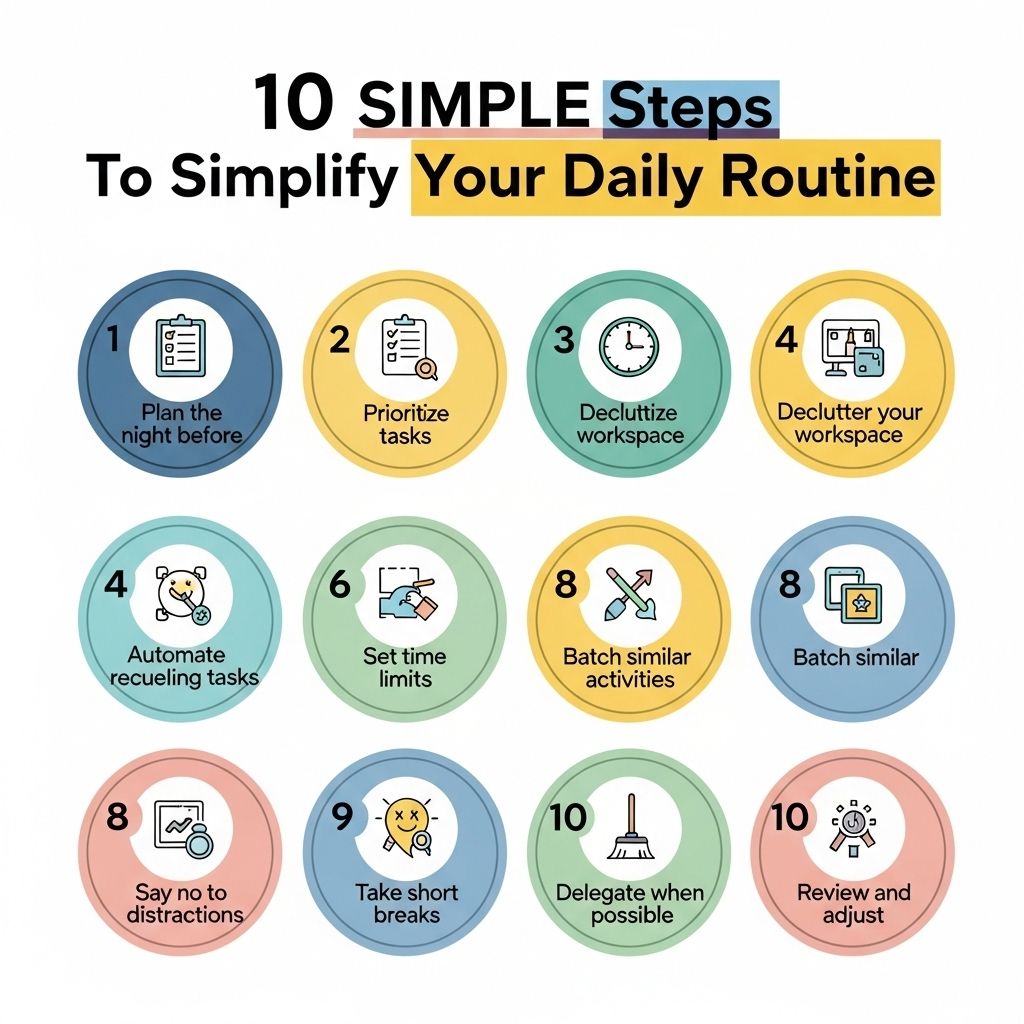
The Science of Decision Fatigue and Why Your Routine Matters
Why do we feel so drained by 3:00 PM? Research suggests that decision fatigue is a legitimate professional and personal hazard. When we are forced to make constant, small choices—like what to eat, which email to answer, or how to organize a task—our cognitive ability to maintain concentration plummets.
Studies indicate that after just one hour of continuous task performance, there can be a 20% reduction in decision-making effectiveness. Even more concerning, the Journal of Health Psychology notes that high levels of decision fatigue can lead to a 40% increase in cortisol levels. This chronic stress response is linked to long-term health issues, including immune system suppression and persistent fatigue. By simplifying your daily structure, you aren't just saving time; you are protecting your physical and mental health, fostering greater mental clarity and overall well-being, which is a core benefit of learning How To Simplify Your Daily Routine And Save More Time.
Mastering the Art of Evening Planning
One of the most effective ways to reclaim your morning and understand How To Simplify Your Daily Routine And Save More Time is to stop leaving it to chance. The "night-before" strategy is a cornerstone of high-performance routines.
Why You Should Stop Starting Your Day in "Reaction Mode"
When you wake up and immediately check emails or social media, you are letting others dictate your priorities. This forces your brain into a state of reactivity. By setting your intentions the night before, you wake up with a clear roadmap. This shift transforms your morning from a chaotic scramble into a calm, controlled start that sets a positive tone for the next 12 hours, significantly enhancing your personal effectiveness and demonstrating How To Simplify Your Daily Routine And Save More Time effectively.
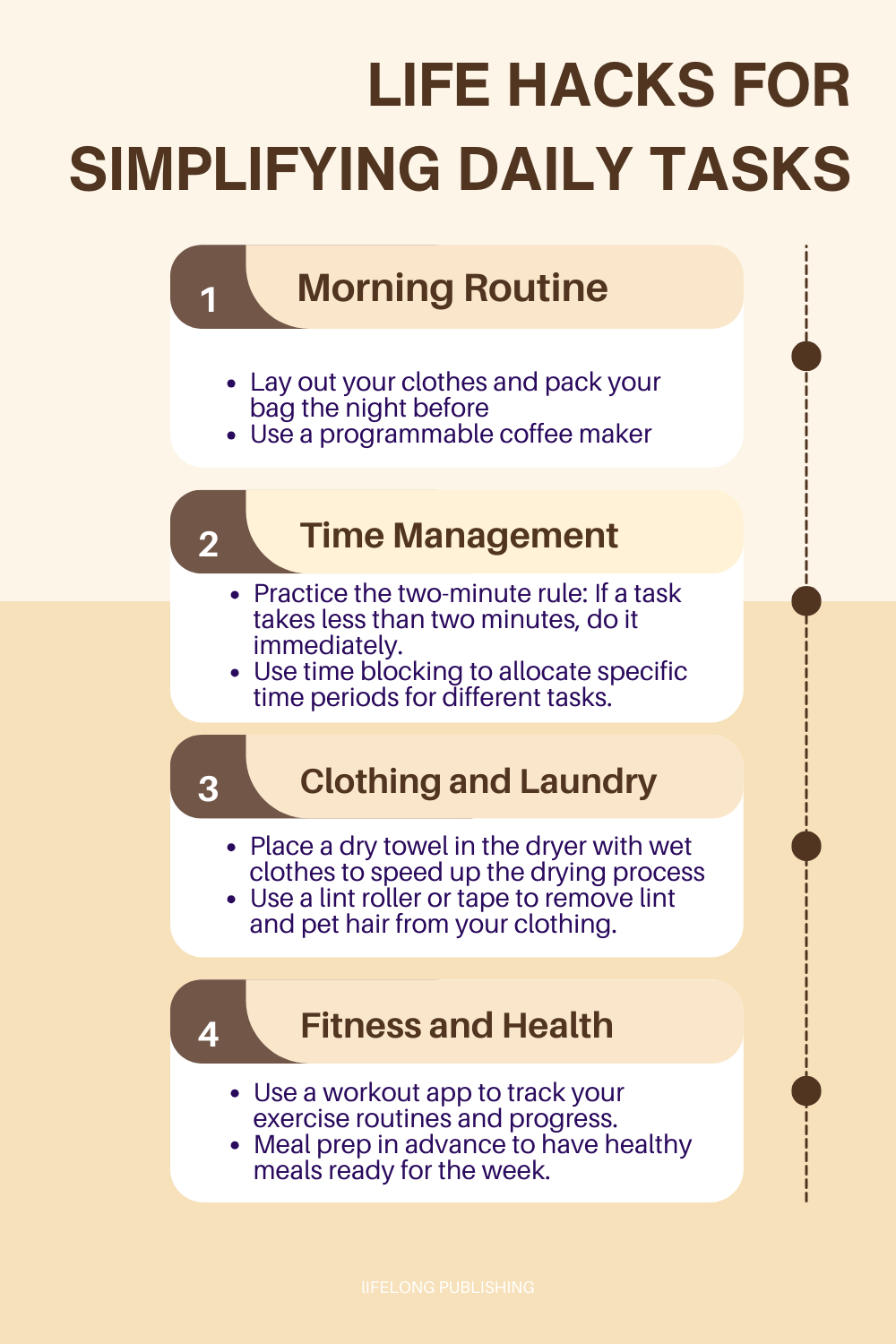
Implementing Effective Time Blocking for Peak Productivity
Multitasking is a productivity myth. In reality, shifting between unrelated tasks creates "attention residue," where your brain struggles to switch gears, causing you to lose time and focus. Time blocking is the antidote to this scattered approach, offering a clear path for How To Simplify Your Daily Routine And Save More Time.
How to Build a Better Schedule
- Identify Your High-Impact Tasks: Determine which three tasks provide the most value to your day.
- Dedicated Focus Windows: Block out 60 to 90 minutes for deep work where notifications are silenced.
- Batch Communication: Group your emails, Slack messages, and phone calls into specific windows rather than responding in real-time.
- Protect Your "Think Time": Ensure you have a block of time for actual creative thinking or project planning, rather than just reactive execution.
By grouping similar tasks together, you allow your brain to enter a "flow state" more easily. This reduces the friction of starting new tasks and helps you finish your workday feeling accomplished rather than just busy, a key aspect of How To Simplify Your Daily Routine And Save More Time.
The Power of the "Sunday Reset" Routine
Many people struggle with "Monday morning panic" simply because they aren't prepared for the week ahead. A Sunday Reset is a proactive habit that acts as a buffer against the chaos of the coming week, a cornerstone of successful habit formation, and a powerful method for How To Simplify Your Daily Routine And Save More Time.
What to Include in Your Weekly Reset
- Home Maintenance: A quick 30-minute tidy of main living areas helps you wake up to a clean environment on Monday.
- Meal Planning: Even if you only map out 3–4 dinners, having a plan prevents the "what's for dinner?" indecision that plagues weeknights.
- Logistics Prep: Pack bags, prepare uniforms, and ensure your calendar is synced and reviewed.
- Mental Review: Jotting down your goals for the week provides a sense of control and reduces that "invisible mental load" that often carries over from the weekend.
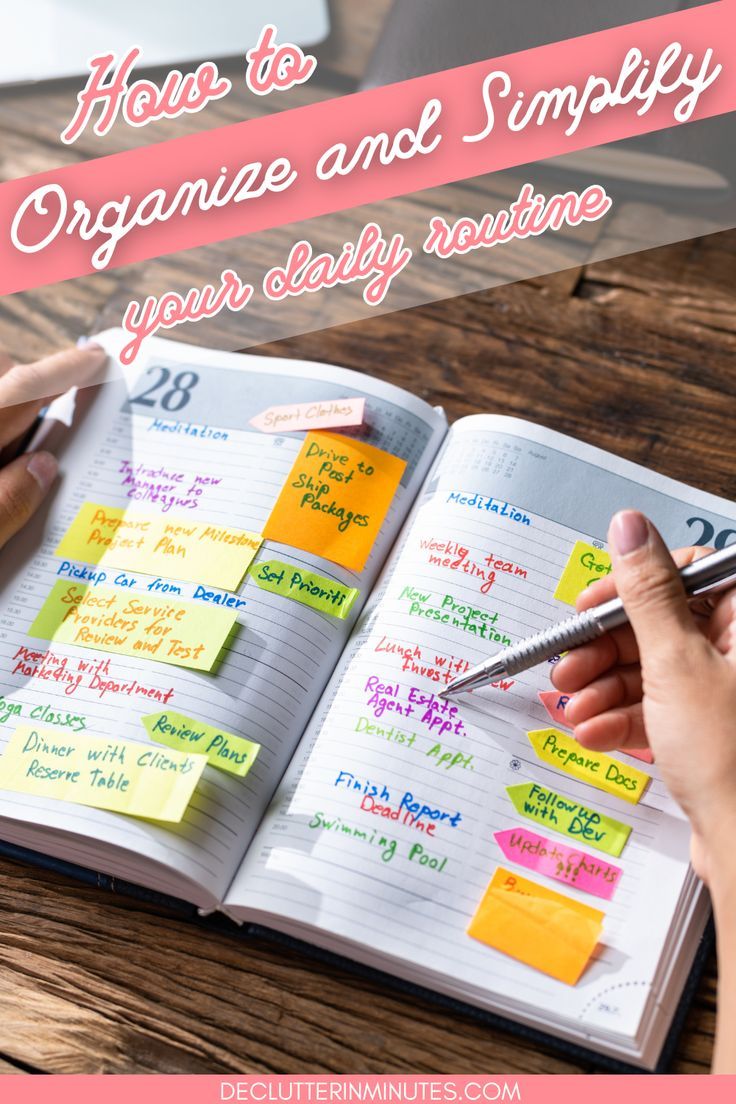
Streamlining Your Wardrobe and Personal Environment
Clutter in your physical space often mirrors the clutter in your mind. A wardrobe stuffed with clothes you don't wear is a daily source of decision fatigue. You don't need to adopt extreme minimalism to see the benefits of a curated closet.
Benefits of a Capsule Wardrobe
- Reduced Decision Fatigue: With fewer, high-quality choices, getting dressed takes seconds, not minutes.
- Financial Savings: You spend less on impulse buys and more on versatile pieces you actually love.
- Increased Focus: By removing the visual noise of excess, you start your day with a sense of clarity.
Consider implementing a "capsule" approach where your clothes can be easily mixed and matched. When your environment is streamlined, your morning routine becomes automatic, allowing you to save your precious energy for the challenges that actually require your unique input, a practical demonstration of How To Simplify Your Daily Routine And Save More Time.
Automating Recurring Tasks to Free Up Mental Bandwidth
In 2026, there is no reason to waste brainpower on recurring, routine tasks. If a task is predictable—like paying utility bills, ordering household staples, or managing subscription renewals—it should be automated.
Tools for Better Automation
- Subscription Services: Automate the delivery of groceries and personal care items to eliminate the need for weekly shopping trips.
- Digital Reminders: Use calendar alerts or task management apps to prompt you for recurring responsibilities.
- Financial Automation: Set up auto-pay for all fixed expenses. This not only saves time but also ensures you never miss a deadline, protecting your financial health.
By building systems that work while you focus on high-priority projects, you are essentially "outsourcing" the mundane aspects of your life. This creates the space necessary to pursue your long-term goals without being bogged down by the minutiae of daily maintenance, a fundamental aspect of effective energy management and understanding How To Simplify Your Daily Routine And Save More Time.
Cultivating a "Single-Tasking" Mindset for Deep Work
The modern obsession with multitasking is perhaps the greatest thief of productivity in the 21st century. While many believe that juggling three browsers, a messaging app, and a phone call is efficient, research shows it actually leads to a 40% drop in productivity due to the cognitive costs of task-switching (Source 4). To simplify your routine and truly grasp How To Simplify Your Daily Routine And Save More Time, you must abandon the myth that your brain is a computer that can run multiple complex processes simultaneously.
The Neuroscience of Focused Attention
When you switch tasks, your brain enters a "refractory period," where part of your attention remains stuck on the previous task. By adopting a single-tasking philosophy, you eliminate this mental lag. Instead of trying to do everything at once, you assign each task its own dedicated "container" in your day. This isn't just about doing one thing at a time; it’s about protecting your cognitive resources from the degradation that happens when you constantly context-switch.
- Implement "Focus Sprints": Set a timer for 50 minutes of deep, uninterrupted work on a single project.
- Create a "No-Distraction" Zone: Close all tabs on your computer that are not relevant to the task at hand.
- Single-Source Communication: Check emails and messages only during specified intervals rather than keeping them open as a background process.
- Physical Cues: Use headphones or a specific desk lamp to signal to yourself (and others) that you are currently in a deep-work phase.
By narrowing your focus to one objective, you reduce the mental load associated with tracking multiple incomplete tasks. This allows you to finish your work faster and with a higher degree of quality, ultimately saving you hours that would otherwise be lost to the cycle of starting, stopping, and refocusing, a direct outcome of learning How To Simplify Your Daily Routine And Save More Time.
Establishing Consistent Nutrition and Meal Routines
Decision fatigue is most prevalent in the kitchen. The daily question of "what’s for dinner?" is a significant drain on your energy that often leads to poor dietary choices or expensive takeout. By simplifying your approach to food, you convert a daily stressor into a streamlined system that supports your physical health and your schedule, illustrating How To Simplify Your Daily Routine And Save More Time (Source 5).
Strategies for Simplified Meal Management
- Themed Dining Nights: Assign a theme to every day of the week—such as "Taco Tuesdays" or "Pasta Thursdays"—to remove the guesswork from menu planning.
- Batch Cooking Basics: Dedicate two hours on the weekend to prepare staples like proteins, grains, or chopped vegetables that can be used in multiple meals throughout the week.
- Standardized Breakfasts: Rotate between two or three healthy, quick-to-prepare breakfast options to eliminate the need for morning culinary decision-making.
- Digital Grocery Lists: Use shared digital apps to keep an ongoing list that updates in real-time, preventing the need for pantry audits before every shopping trip.
When you remove the ambiguity of your meals, you reduce the time spent in the kitchen and the mental energy required to manage your household’s nutrition. A simplified system allows you to eat better without spending your limited free time on complex preparation or frantic last-minute grocery runs, a clear example of How To Simplify Your Daily Routine And Save More Time.
Optimizing Your Digital Ecosystem
Your digital space is an extension of your physical environment. If your desktop is cluttered with icons, your email inbox has thousands of unread messages, and your phone is a graveyard of unused apps, you are constantly battling digital noise. This noise is a major contributor to feeling overwhelmed and distracted throughout the workday. Consider a periodic digital detox to reset your focus and reclaim your attention (Source 3).
Decluttering Your Digital Life
- Aggressive Unsubscribing: Use an email management tool to mass-unsubscribe from newsletters you no longer read.
- Notification Triage: Turn off all non-essential notifications on your phone and computer. Only allow alerts from humans you actually need to hear from in real-time.
- Cloud Organization: Move all files into a structured, searchable cloud system so you never waste time hunting for documents.
- App Minimalism: Delete any app you haven't opened in the last 30 days. If you need it later, you can always re-download it.
A clean digital environment acts as a force multiplier for your productivity. When your tools are organized, you spend less time navigating software and more time actually utilizing those tools to achieve your goals. This reduction in digital friction is a subtle but powerful way to reclaim your time each day, and a key strategy for How To Simplify Your Daily Routine And Save More Time.
Designing Your Morning Flow for Maximum Energy
A rigid, minute-by-minute schedule often fails at the first sign of an unexpected problem. Instead of a strict routine, focus on a Morning Flow—a sequence of habitual actions that ground you without the pressure of a ticking clock (Source 5). This allows for flexibility while ensuring that your most important personal needs are met before the world starts demanding your attention, serving as a vital stress management technique and a key step in learning How To Simplify Your Daily Routine And Save More Time.
Building Your Personal Flow
- The "First 15" Rule: Dedicate the first 15 minutes of your morning to yourself before checking any device.
- Movement Anchors: Include a short, consistent movement habit, such as stretching or a brief walk, to wake up your body and boost circulation.
- Intentional Hydration: Keep a glass of water by your bed to ensure you hydrate immediately upon waking, which improves alertness.
- Non-Negotiable Self-Care: Pick one activity—journaling, meditation, or reading—that helps you feel centered, and prioritize it over administrative tasks.
By focusing on a flow rather than a rigid schedule, you remove the stress of "falling behind" if your morning takes an unexpected turn. This approach builds psychological resilience, ensuring you start your day feeling prepared and composed, regardless of what the day throws at you.
The Role of Delegation and Outsourcing in Daily Life
Many of us suffer from the "I can do it better myself" trap, which leads to an unsustainable workload. Simplifying your life, and truly understanding How To Simplify Your Daily Routine And Save More Time, often requires acknowledging that your time is a finite currency. If a task can be handled by someone else—or by a service—it is often worth the investment to delegate it, thereby freeing up your highest-value hours for tasks that truly require your unique expertise (Source 2).
When to Delegate and What to Outsource
- Identify Low-ROI Tasks: List the chores that you dislike or that don't move the needle on your long-term goals.
- Service-Based Solutions: Utilize laundry services, grocery delivery, or professional cleaning services for time-consuming household maintenance.
- Collaborative Delegation: Within a family or professional team, clearly define roles so that no single person becomes the bottleneck for all operations.
- Value-Based Decision Making: If your hourly rate is higher than the cost of a service, it is mathematically more efficient to delegate that task.
Delegation is not a sign of weakness; it is a strategic resource management technique. By offloading tasks that drain your energy, you ensure that your remaining hours are spent on high-impact activities. This shift is essential for anyone looking to scale their productivity without burning out.
Managing Your Physical Environment to Reduce Mental Friction
Your physical surroundings dictate your focus levels more than you might realize. If you have to move piles of paper to sit at your desk or hunt for your keys every morning, you are creating unnecessary friction in your daily routine. Designing your environment for ease of use is a foundational step in simplifying your life and learning How To Simplify Your Daily Routine And Save More Time.
Creating an "Ease-of-Use" Environment
- The "Landing Strip" Concept: Create a dedicated spot near your door for essentials like keys, wallet, and bag so you never lose them.
- Visual Simplicity: Keep your surfaces clear of non-essential items to reduce the subconscious signal of "clutter" that can increase cortisol levels.
- Ergonomic Optimization: Ensure your workspace is physically comfortable to prevent the fatigue that comes from poor posture or inefficient equipment.
- Reset Triggers: End your workday by resetting your space to a "neutral" state, ensuring the next morning starts with a blank, inviting canvas.
When your environment works in harmony with your goals, you remove the micro-stressors that accumulate throughout the day. A well-ordered home or office allows you to transition between tasks effortlessly, preserving your energy for the work that matters most.
Establishing Boundaries to Protect Your Time
You cannot simplify your routine if you are constantly saying "yes" to external demands that don't align with your priorities. Setting boundaries is the most effective way to protect your time and ensure that your daily routine remains your own, a crucial element of How To Simplify Your Daily Routine And Save More Time. This requires a shift from being a reactive participant in other people's plans to being an intentional architect of your own time.
How to Communicate and Maintain Boundaries
- The Power of the Polite "No": Learn to decline invitations or additional work that doesn't align with your top three daily priorities.
- Scheduled Availability: Communicate to colleagues and family when you are "in the zone" and unavailable for non-emergency interruptions.
- Digital "Off" Switch: Establish a hard stop time for work-related communication to allow your brain to recover fully.
- Prioritizing Personal Time: Treat your personal appointments, exercise sessions, and rest time with the same level of respect as a work meeting.
Boundaries act as a fence around your most valuable asset: your time. By establishing these limits, you signal to others—and to yourself—that your energy is a limited, high-value resource. This creates the structural stability necessary to maintain a simplified routine over the long term.
Leveraging Technology for Habit Tracking and Maintenance
In 2026, technology should be used to reduce manual effort, not increase it. While many apps can become a source of distraction, the right tools can act as automated assistants that keep your simplified routines on track. The key is to find tools that minimize the need for manual inputs and provide maximum clarity.
Integrating Smart Tools into Your Routine
- Automated Habit Trackers: Use apps that provide simple "check-in" reminders to keep you consistent without requiring lengthy logs.
- Calendar Synchronization: Consolidate all your work and personal obligations into one master calendar to avoid double-bookings and scheduling conflicts.
- Voice-to-Text Capture: Use voice notes to capture ideas or tasks on the go, preventing the need to stop and write things down manually.
- Task Management Systems: Utilize simple, visual project management tools that allow you to see your progress at a glance without complex setup.
Technology should exist in the background, supporting your goals rather than demanding your attention. By curating a small, effective digital toolkit, you can automate the maintenance of your habits and ensure that your routine remains consistent and sustainable without requiring constant, conscious effort, thereby demonstrating How To Simplify Your Daily Routine And Save More Time.
The Importance of Restorative Downtime
Simplifying your routine, and truly understanding How To Simplify Your Daily Routine And Save More Time, isn't just about packing in more work; it’s about ensuring you have the energy to sustain your performance. Restorative downtime is a critical component of a high-functioning life. Without scheduled recovery, your cognitive effectiveness will decline, leading to increased errors and a feeling of perpetual exhaustion.
Designing Your Recovery Protocol
- Active Recovery: Engage in low-stress physical activities, such as walking or gentle yoga, to help your body process stress.
- "Brain Dump" Sessions: Periodically empty your mind of lingering concerns onto paper to prevent them from interfering with your relaxation.
- Screen-Free Evenings: Designate the last hour before bed as a screen-free time to improve sleep quality and prepare your mind for rest.
- Planned Leisure: Schedule your downtime as strictly as your work meetings to ensure that your recovery is never sacrificed for last-minute tasks.
True productivity is a cycle of exertion and recovery. By prioritizing downtime, you replenish your mental and physical reserves, allowing you to return to your routine with renewed clarity and focus. This is essential for sustainable energy management and the ultimate secret to a long-term, sustainable, and simplified life.
Mastering the "Transition" Moments
Most people lose time in the "gaps" between tasks. These transitions—moving from work to home, from one meeting to the next, or from a period of focus to a period of rest—are where we often feel the most scattered. By intentionally managing your transitions, you can maintain your momentum and mental state throughout the day, a subtle yet powerful way to learn How To Simplify Your Daily Routine And Save More Time.
Strategies for Smoother Transitions
- The "Five-Minute Reset": Use the short gap between meetings to clear your desk, take a few deep breaths, and briefly review the next task.
- Commute as a Buffer: If you work outside the home, use your commute to mentally shift gears, either by listening to something uplifting or by practicing silence.
- The "Work-End" Ritual: Create a specific action—like closing your laptop and putting it away—that signals to your brain that the workday is officially over.
- Context Shifting: When moving from work to personal time, change your physical environment or clothing to reinforce the boundary between your different roles.
These rituals act as a reset button for your brain, preventing the stress of one activity from bleeding into the next. By mastering these transitions, you create a seamless flow through your day, reducing the feeling of being pulled in multiple directions and allowing you to be fully present in whatever you are doing.
Cultivating a Growth Mindset Toward Routine
Finally, remember that your routine is not a prison; it is a tool. A simplified routine, and the understanding of How To Simplify Your Daily Routine And Save More Time, should evolve as your life changes. What works for you in 2026 might need adjustment in 2027. Maintaining a growth-oriented perspective allows you to iterate on your habits, keeping what works and discarding what no longer serves your goals.
Iterative Improvement of Your Routine
- Monthly Reviews: Spend 15 minutes at the end of each month to evaluate which parts of your routine are helping and which are causing friction.
- Permission to Pivot: If a habit isn't yielding results, don't be afraid to scrap it and try something else.
- Focus on Small Wins: Celebrate the small improvements in your daily efficiency, as these are the building blocks of a major transformation.
- Stay Curious: Continuously look for new, simpler ways to handle recurring tasks and challenges as technology and your personal circumstances evolve.
Your routine is a living system. By treating it with flexibility and a willingness to experiment, you ensure that it remains a source of strength rather than a source of rigidity. As you refine your approach, you will find that the time you save can be reinvested into the things that truly bring you joy, fulfillment, and long-term success.
The Psychology of Letting Go: Simplifying Your Commitments
Simplifying your routine isn't just about managing tasks; it is about managing your emotional attachment to "busy-ness." Many of us equate a jam-packed schedule with self-worth, a dangerous trap that leads to chronic burnout. By ruthlessly auditing your commitments, you can identify low-impact activities that are draining your time without offering a proportional reward, a critical step in learning How To Simplify Your Daily Routine And Save More Time.
Evaluating Your "Yes" Quotient
- The 80/20 Audit: Identify the 20% of your activities that produce 80% of your results. Everything else is a candidate for elimination or delegation.
- Audit Your Calendar: Look back at the last two weeks. Which meetings or obligations left you feeling drained rather than accomplished?
- Practice Strategic Refusal: Learn to decline requests that do not align with your core objectives. Saying "no" to a distraction is, in effect, saying "yes" to your priorities.
- Reduce Social Overload: Focus your energy on a few high-quality relationships rather than trying to maintain a broad, superficial social calendar that requires constant maintenance.
By shedding the non-essential, you create a "white space" in your day. This isn't just empty time; it is cognitive capacity that allows you to think more clearly, solve problems faster, and engage more deeply with the people and projects that truly define your success.
Building Resilience Against Future Complexity
Even with the best systems in place, life in 2026 will inevitably throw curveballs. The goal of a simplified routine, and a key aspect of understanding How To Simplify Your Daily Routine And Save More Time, is not to achieve an impossible state of constant perfection, but to build the resilience required to recover quickly when things go sideways. When you have a solid foundation, an unexpected delay or a sudden emergency doesn't derail your entire week—it just becomes a minor adjustment in your flow.
Strategies for Maintaining Flexibility
- Buffer Blocks: Build 30-minute "cushion periods" into your daily schedule to handle the inevitable interruptions that arise.
- Modular Planning: Treat your routine like a set of building blocks. If you miss a morning workout, you have a pre-planned "Plan B" to squeeze in a 10-minute stretch later, rather than abandoning the habit entirely.
- Forgiveness as a Tool: Release the guilt associated with "off" days. A rigid routine that punishes you for imperfection is unsustainable; a flexible one that encourages progress is a lifelong asset.
- Quarterly System Updates: Every three months, assess your tools and habits. As your goals shift, so should the systems you use to reach them.
By viewing your routine as a flexible framework rather than a rigid cage, you empower yourself to adapt without losing momentum. This is the hallmark of high-performers who maintain their sanity while consistently hitting their targets.
As you move forward, remember that simplicity is a practice, not a destination. By consistently applying these principles—planning the night before, automating the mundane, and fiercely protecting your focus—you are not just saving time; you are reclaiming your life from the noise of the modern world, truly mastering How To Simplify Your Daily Routine And Save More Time. Every small adjustment you make today compounds into a significant increase in your capacity to do work that matters, enjoy deep rest, and lead a life of greater intentionality. Start with one change today, and watch how quickly your days transform.
References
-
Makingsenseofcents — 15 Easy Ways To Simplify and Improve Your Daily Routine, 2026
-
Plantoorganize — 24 Ways to Simplify Your Life and Create a More Organized, Stress-Free …, 2026
-
Declutteringmom — 19 Ways to Simplify Your Daily Routine – Decluttering Mom, 2026
-
Themodestman — 15 Ways to Simplify Your Daily Routine Without Cutting Corners, 2026
-
Balancethroughsimplicity — Simple Routines That Save Me Hours Every Week (and Reduce Mental Load), 2026
-
Bemorewithless — 10 Daily Habits To Help You De-stress Life – Be More with Less, 2026
-
Linkedin — How to Simplify Daily Tasks for Better Efficiency – LinkedIn, 2026
-
Simplyfiercely — 20 Ways I’ve Simplified My Life – Simply + Fiercely, 2026