
The landscape of personal finance has shifted dramatically. In 2026, best practices for using AI to manage your personal finances dictate that managing your money is no longer about manual spreadsheets or tedious ledger entries; it is about leveraging AI-powered financial intelligence and financial automation to make smarter, faster, and more data-driven decisions. Whether you are aiming to eliminate high-interest debt, optimize your investment portfolio, pursue comprehensive wealth management, or simply build a more resilient emergency fund, artificial intelligence has become the ultimate equalizer.
However, with great power comes the need for great strategy. Using AI effectively requires more than just downloading an app; it requires a disciplined approach to selecting and utilizing financial management apps effectively, data privacy, goal setting, and human oversight. In this guide, we explore the best practices for using AI to manage your personal finances to ensure you are maximizing your wealth-building potential.
Why AI Is the Future of Money Management
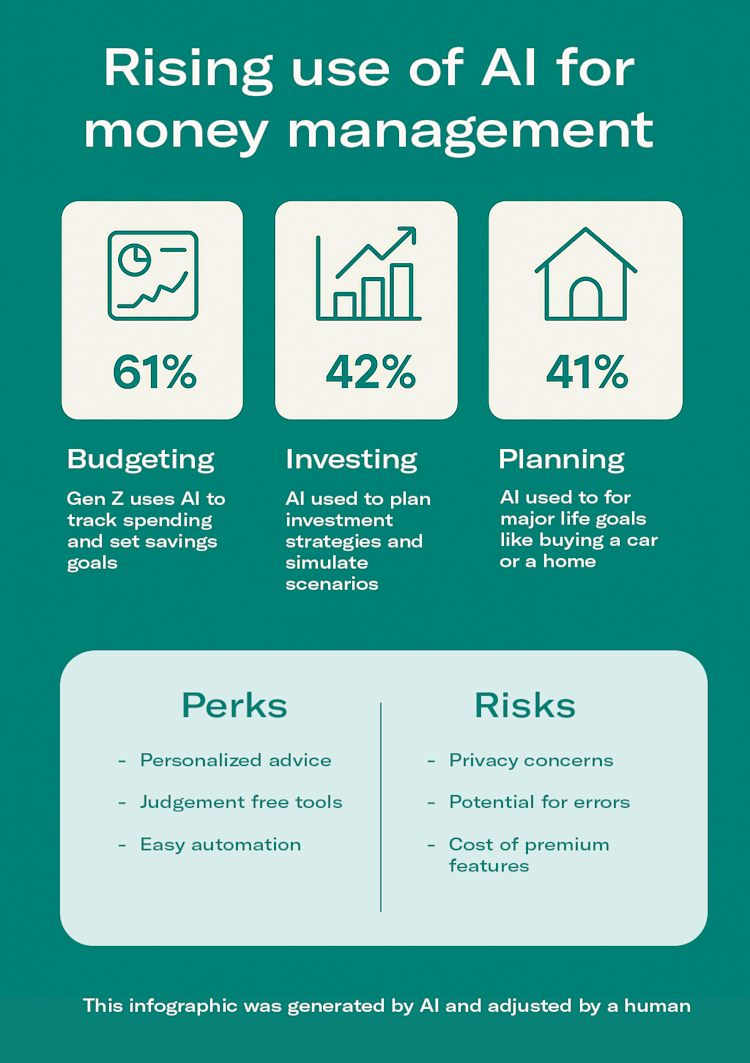
AI is changing personal finance by transforming raw data into actionable insights. Following the best practices for using AI to manage your personal finances, platforms like Monarch Money, Copilot, and Cleo have moved beyond simple expense tracking. They now utilize machine learning to predict your future cash flow management, identify hidden subscriptions, and provide personalized financial advice and investment coaching based on your specific risk tolerance.
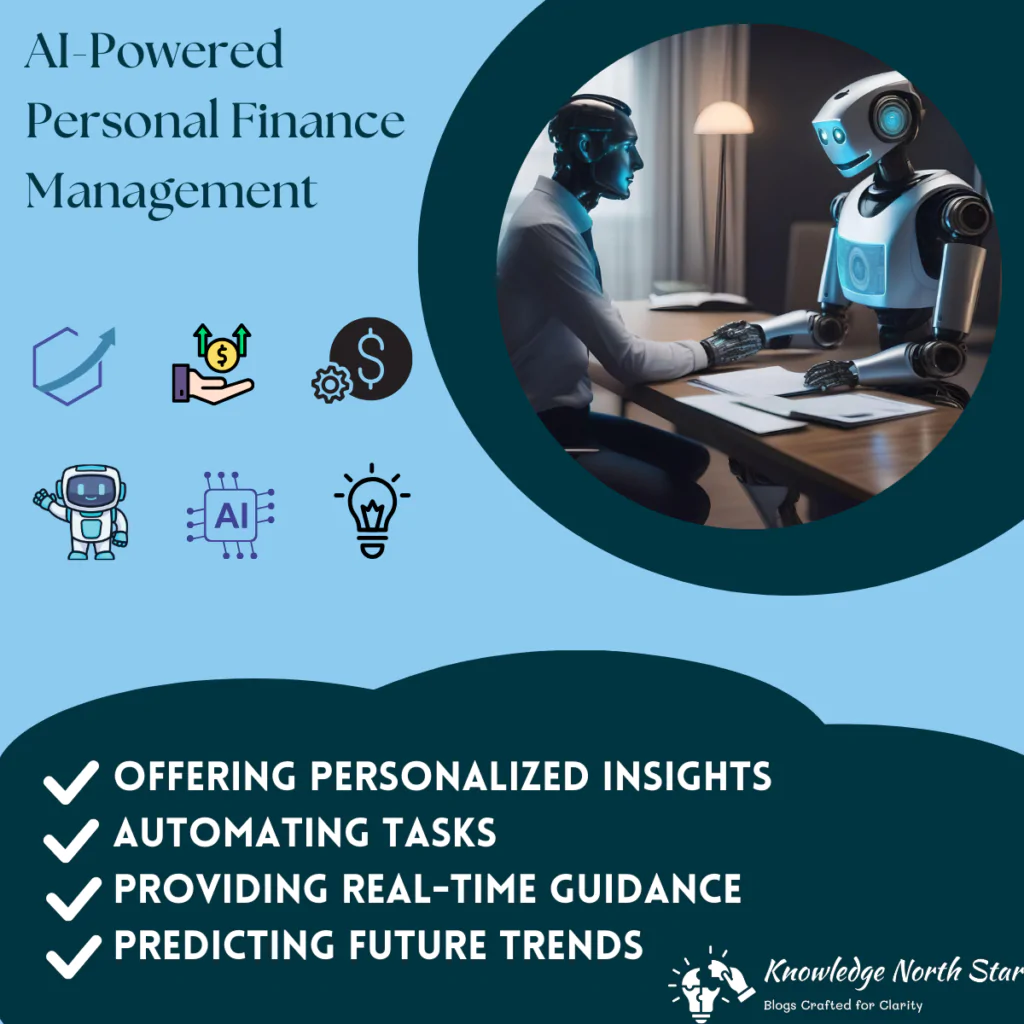
By utilizing these budgeting apps and tools, users can transition from reactive spending—where you look back at what you spent last month—to proactive financial planning, where the AI anticipates your needs before you even reach for your credit card.
1. Prioritize Data Security and Privacy
The most fundamental of the best practices for using AI to manage your personal finances is protecting your digital footprint. Because these tools require access to your bank accounts and transaction history, you must be vigilant about security, including robust fraud detection capabilities.
Enable Multi-Factor Authentication (MFA): Ensure every account linked to your AI finance tool uses MFA.
Check Encryption Standards: Only use platforms that utilize bank-level 256-bit AES encryption.
Audit Permissions: Regularly review which third-party apps have “read-only” access to your financial data and revoke access for any tools you no longer use.
2. Master the Art of AI Prompting
If you are using Large Language Models (LLMs) to help with financial planning, achieving specific financial goals, or debt payoff strategies, a key aspect of the best practices for using AI to manage your personal finances is that the quality of your output depends entirely on the quality of your input. To get the best results, be specific with your constraints.
Instead of asking, “How do I save money?”, try a structured prompt like: “I have a monthly income of $5,000, $15,000 in student loan debt at 6% interest, and a goal to save $10,000 for a house down payment by 2028. Create a monthly budget and a debt-repayment strategy that prioritizes the high-interest debt while maintaining a $500 monthly savings contribution.” This level of detail is crucial for achieving your savings goals and even for long-term retirement planning.
<img alt="Top 6 PROVEN Benefits of AI Personal Finance Tracking and Advice …” src=”https://servicetodaylife.com/wp-content/uploads/2026/05/infographics-ai-finance-tracking-advice.png” style=”max-width:100%;height:auto;border-radius:8px;margin: 1rem 0″ />
3. Avoid the “Set It and Forget It” Trap
While AI excels at automation, it is not a “set it and forget it” solution. Adhering to the best practices for using AI to manage your personal finances means recognizing that financial markets change, interest rates fluctuate, and your personal life goals will evolve, requiring adjustments to your investment strategies and overall financial approach.
Monthly Reviews: Even with AI tracking your spending, conduct a monthly financial check-in. This ensures the AI’s categorization of expenses is accurate and that your spending aligns with your current priorities.
Verify Automated Advice: If an AI tool suggests a specific investment move, use it as a starting point for research rather than an absolute directive. Always double-check tax implications or fees before executing a trade.
4. Leverage AI for Debt Management and Credit Scoring
One of the most powerful applications of AI in 2026, and a core component of the best practices for using AI to manage your personal finances, is its ability to optimize debt repayment. AI algorithms can analyze your various debts—credit cards, personal loans, and mortgages—and determine whether the avalanche method or the snowball method will save you the most money in interest payments.
Furthermore, many AI tools now provide predictive credit scoring, showing you exactly how a specific action (like paying off a small balance early) will impact your credit score in real-time. This level of granular feedback was once reserved for professional financial advisors.
5. Cultivate Financial Literacy Alongside AI
The danger of relying too heavily on technology is the atrophy of your own financial judgment. Therefore, a key among the best practices for using AI to manage your personal finances is to use AI as a financial coach, not a replacement for your own understanding.
Ask your AI tools to explain why* they are making a recommendation. If the AI suggests cutting a specific expense, ask it to explain the long-term impact on your net worth. By treating your AI tools as an interactive learning platform, you will build the skills necessary to navigate complex financial decisions even if the technology were to go offline.
Conclusion: The Human-AI Partnership
In 2026, the most successful individuals are those who treat AI as a partner in their financial journey. This approach is central to the best practices for using AI to manage your personal finances. By combining the computational power of AI—which can track thousands of transactions and identify patterns in seconds—with your own human intuition and goal-setting, you create a formidable team.
Remember to prioritize security, stay engaged with your financial data, and use AI to augment your decision-making rather than outsource it entirely. By following these best practices for using AI to manage your personal finances, you aren’t just managing your money; you are engineering your path to long-term financial freedom.