
Is your home working for you, or against you? In 2026, our living spaces have evolved into multipurpose hubs—serving as offices, gyms, schools, and sanctuaries. If you feel like you are constantly battling clutter or struggling to find focus, you aren't alone. The state of your environment is directly linked to your mental clarity and your output. A disorganized home creates a "visual noise" that drains your cognitive battery before you even sit down to work.
Organizing your home isn't just about aesthetic perfection or Pinterest-worthy pantry labels. It is a strategic approach to optimizing your lifestyle for maximum efficiency. When everything has a dedicated "home," you stop wasting precious mental energy searching for tools or cleaning up messes. This guide will walk you through the professional-grade strategies to reclaim your space, boost your productivity, and foster a environment that supports your 2026 goals.
The Psychology of Space: Why Organization Matters
Before we move a single box, let’s talk about the "why." Scientific research consistently shows that physical clutter competes for your attention. Every item on your desk or floor is a potential distraction. When your brain is constantly processing the visual stimuli of a messy room, it struggles to enter a state of "deep work."
An organized home provides a sense of control. In an era where many of us juggle global projects from our living rooms, having a clear, defined space is a form of self-care. It allows you to switch your brain from "house mode" to "work mode" efficiently. By creating systems that reduce friction, you are essentially outsourcing your decision-making to your environment.
Phase 1: The Strategic Decluttering Process
You cannot organize clutter. The first step in any transformation is the ruthless removal of items that no longer serve your purpose.
The "One-Room" Rule
Don’t try to organize your entire house in a weekend. It is a recipe for burnout. Instead, pick one high-impact area—like your desk or your kitchen workspace—and focus entirely on that. Break it down into bite-sized tasks.
- Sort into three piles: Keep, Donate/Sell, and Trash.
- The One-Year Test: If you haven't touched an item in the last 12 months, it is time for it to go.
- Be Ruthless: If an item is broken, expired, or redundant, remove it immediately.
Tackling Paperwork and Digital Chaos
Physical paper is the enemy of productivity. In 2026, we have the tools to be almost entirely paperless. Invest in a high-quality scanner or use mobile scanning apps to digitize important documents. Create a cloud-based filing system with a clear naming convention (e.g., YYYY-MM-DD_Category_Description). For the paperwork that must remain physical, use a "Touch It Once" rule—either file it, shred it, or act on it immediately.
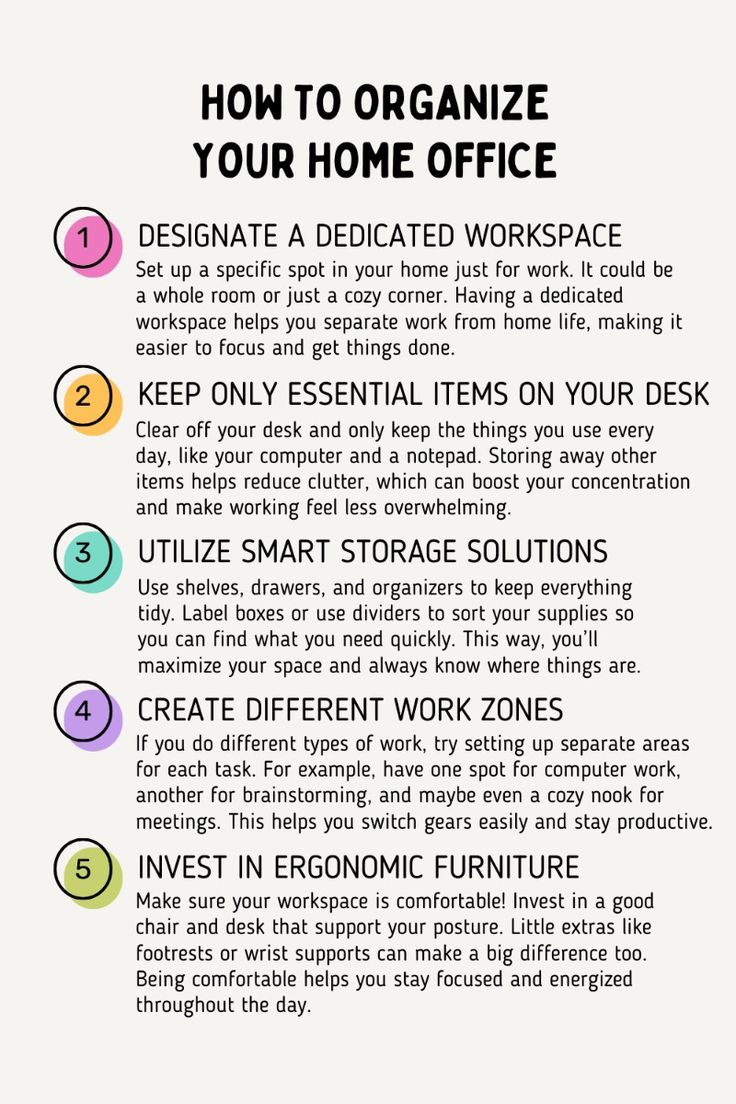
Phase 2: Creating a High-Performance Home Office
Your workspace is the engine room of your productivity. If your office is a disaster, your output will suffer. Let's optimize it for 2026.
Evaluate Your Needs and Layout
Not everyone needs a massive desk, but everyone needs a defined "zone." Even if you work from a corner of your living room, use a rug or specific lighting to signal that this area is for work. Ensure your chair provides proper ergonomic support; back pain is the number one productivity killer.
Cable Management and Tech Hygiene
Nothing ruins a productive vibe faster than a tangled "spaghetti" of wires under your desk. Use cable sleeves, clips, and under-desk trays to keep wires out of sight. When your desk surface is clear, your mind feels clearer. Additionally, keep your desktop files organized. A clean digital desktop is just as important as a clean physical one.
Essential Tools Within Reach
If you find yourself standing up to find a stapler, a pen, or a notebook every ten minutes, you are breaking your flow. Place your most-used tools within arm's reach. Everything else should be stored in drawers or cabinets. If you don't use it daily, don't store it on your desk.
Phase 3: Systems for Long-Term Maintenance
Organization isn't a one-time project; it’s a lifestyle. To keep your home productive throughout 2026, you need to implement sustainable systems.
The "Closing Shift" Routine
Borrow a habit from the restaurant industry: perform a "closing shift" at the end of every day. Spend 10 minutes resetting your space. Clear your desk, wash the coffee mug, and put away the stray notebooks. Waking up to a clean, organized space allows you to start your next day with momentum rather than frustration.
Utilize Vertical Storage
When floor space is limited, look up. Shelving, pegboards, and wall-mounted organizers are game-changers. By utilizing vertical space, you keep surfaces clear, which reduces visual clutter and makes cleaning easier.
Digital Inventories
For those with a lot of items, consider a digital inventory system. Keeping track of what you own prevents "over-buying" and helps you identify exactly where things are stored. It might sound excessive, but it is one of the most effective ways to manage a household efficiently in 2026.
Phase 4: Ergonomics and Well-Being
Productivity is not just about speed; it is about sustainability. If you are uncomfortable, you will tire out faster.
- Lighting: Natural light is ideal. If you work in a room without windows, invest in a desk lamp that mimics daylight temperatures to reduce eye strain.
- Movement: Integrate a standing desk or a simple desk-side stretching routine.
- Nature: Adding a plant to your workspace has been shown to improve mood and focus. Keep it simple—a low-maintenance succulent or snake plant is perfect for an office environment.
Expert Tips for the 2026 Professional
- Personalize for Inspiration: While clutter is bad, personality is good. Keep a few items that inspire you—a piece of art, a photo, or a memento—but limit it to a few pieces.
- The 30-Minute Reset: Once a month, do a "deep reset" of your home. Re-evaluate your storage systems. Are they still working for you? If not, adjust.
- Reduce Friction: If you hate folding laundry, get a system where you can hang everything. If you hate filing, use a simple "to-do" vs. "done" tray system. Design your systems around your habits, not your aspirations.
Frequently Asked Questions (FAQ)
Q: How do I stay motivated to keep my home organized?
A: Focus on the "instant results." When you finish organizing one drawer or a small section of your desk, the feeling of accomplishment is addictive. Use that energy to fuel the next task. Also, remember that organization is not about being "perfect"—it is about creating a space that supports your goals.
Q: What should I do if I have too much stuff and not enough space?
A: This is a common challenge in 2026. Prioritize multi-functional furniture. Ottomans with storage, bed frames with drawers, and vertical shelving are your best friends. If you still can't fit it, you have to be honest about whether you truly need those items.
Q: How often should I declutter?
A: Try a "maintenance" declutter every weekend (15-20 minutes). A "deep" decluttering session should happen once every quarter. Consistency is the secret to a stress-free home.
Q: Is it worth investing in expensive organization products?
A: Not necessarily. Start with what you have. Use boxes you already own to organize drawers before buying fancy bins. Only buy specialized organizers once you know exactly what you need and where it will go.
Q: How do I get my family to participate in organizing?
A: Make it simple and clear. Label bins, create designated "landing zones" for keys and bags, and explain the benefits. When everyone knows where things go, the stress of "finding stuff" disappears, which usually encourages cooperation.
Conclusion: Reclaiming Your Home for Success
Organizing your home for better productivity is one of the highest-leverage activities you can undertake. By stripping away the unnecessary, defining your workspace, and maintaining your environment with simple daily habits, you create a foundation for success. In 2026, your home should be your headquarters—a place that fuels your ambition and protects your peace.
Start small, stay consistent, and remember that every item you remove or organize is a step toward a more focused, effective, and peaceful version of yourself. Your environment is the stage upon which your life plays out; make sure it is set for success.
Referencias
- Tidy Home Guide — Boost Home Productivity with Proven Organization Hacks, 2025
- LifeHack — 15 Simple And Professional Tips To Be Organized At Home
- Native Teams — How to Create Productivity Home Office in 2025
- Happy Organized Life — 15 Tips to Organize Your Home Office for Maximum Productivity, 2024
- TheCoolist — 25 Home Organization Ideas in 2026 That Actually Go Beyond
- Livingetc — 7 Home Organization Trends for How to Tackle Clutter in 2026
- Reader’s Digest — 57 Home Organization Tips That Could Change Everything, 2025